A geological story more than two billion years in the making is written into the coastal sandstones of the Namibe Desert in South West Angola. As described in South West Angola by J. and S. Mendelsohn (2018), these layers record shifting continents, ancient seas, and the colossal forces that shaped the Earth’s early history. Because Angola has at times lain at the centre of supercontinents and at other times on their edges, it holds clues of great interest to both geologists and palaeontologists. Among the sediments lie the fossils of giant sea predators such as mosasaurs and plesiosaurs. Standing there among these ancient formations, I couldn’t help but wonder what life the present-day desert held, and what bees I might find in such a place.
A small beetle provides scale for the massive, partly exposed jaw of a mosasaur embedded in Namibe Desert sandstone. These marine reptiles, some reaching over 15 meters in length, dominated ocean ecosystems before the extinction event that ended the age of dinosaurs.
Despite its aridity, the Namibe Desert supports a unique fog-dependent ecosystem with specialised plants and adapted fauna. Fog here is a more reliable source of moisture than rain, its tiny droplets feeding small patches of vegetation.
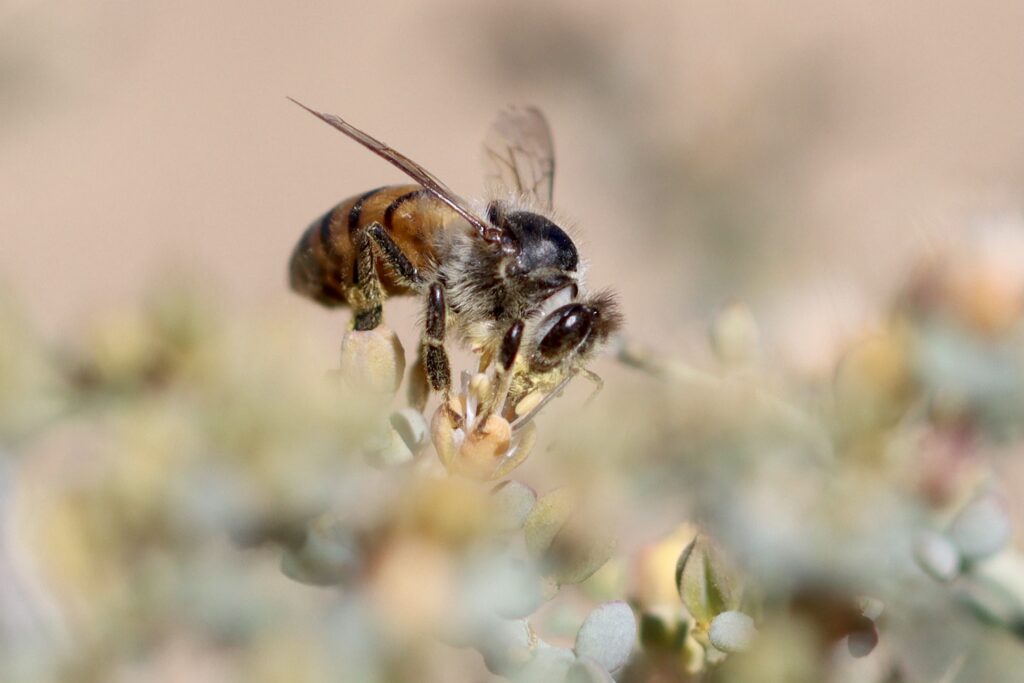
Around one such moisture pocket, where a couple of Mesembryanthemum plants were in flower, I found bees thriving. In one of the driest seasons, eight species of solitary bees were foraging on these two small patches.
One of two small patches of Mesembryanthemum where several bee species were recorded.
To think that their ancestors may have endured the same great changes that ended the reign of the dinosaurs is mind blowing. Among them were both the female and male Fidelia bee, probably Fidelia kobrowi, otherwise unknown from anywhere north of southern Namibia, and a Ceratina bee, possibly Ceratina rhodura, the first record north of Namibia and the first record of the male.
Amegilla velutina
Fidelia kobrowi female
Anthophora vestita
Seladonia male
Fidelia kobrowi female
Seladonia male
Amegilla spp.
Fidelia kobrowi male
Amegilla spp.
Fidelia kobrowi female
Amegilla velutina
Amegilla velutina
Megachile cincta
Fidelia kobrowi male
Anthophora vestita
Lasioglossum male
Ceratina rhodura female
Fidelia kobrowi female
Seladonia male
Megachile cincta
Megachile cincta
Anthophora vestita
Ceratina rhodura female
Ceratina rhodura male
Ceratina rhodura male
Ceratina rhodura female
Fidelia kobrowi male
The bees of Bentiaba
The eight bee species foraging on just two small flower patches in the Namibe Desert, including range extensions and first records, offer only a glimpse of what remains undocumented. Around two hundred bee species have so far been recorded from Angola, yet this is likely only a small part of the country’s true diversity. Vast areas remain unexplored. Michener (1979) observed that bee diversity and abundance are often highest in warm, dry regions, making these arid landscapes especially important for understanding Africa’s wild bees.
Bees, embedded in intricate ecological relationships—shaping and being shaped by their environments—as with the fog-fed flowers of the Namibe, the solitary bees nesting in Karoo riverbanks, and the specialised pollinators of Angola’s unsurveyed regions in the north and east, exist within complex natural systems that we have barely begun to understand. Economic expansion is steadily transforming these habitats into agricultural landscapes, even in countries like Angola where large tracts of intact ecosystems still persist. What took billions of years to form, and millions to populate with life continually adapting and specialising, could disappear within decades.
The bees of the Namibe are descendants of lineages that survived the planetary upheavals which ended the age of dinosaurs. Now they face an entirely different kind of extinction. The urgent task is to document, understand, and protect Angola’s wild bees and their habitats before they are lost to us forever.
References:
Elizalde, S.R.F.F. (2019). Bee diversity in Angola and community change along an altitudinal gradient at Serra da Chela (Bruco). MSc thesis, University of Cape Town, Cape Town, South Africa.
Michener CD (1979) Biogeography of the bees. Annals of the Missouri Botanical Garden 66(3): 277–347.
Nesting in dense groups attracts parasites and predators, yet these aggregations persist. The very feature that seems risky creates the system’s complexity.
Karin Sternberg
For wild bees, a dry riverbed serves as a natural corridor through otherwise open terrain. Its meandering course offers landmarks to navigate by, riverbanks that shelter from the wind, scattered patches of flowers, and soils with just the right texture for burrowing.
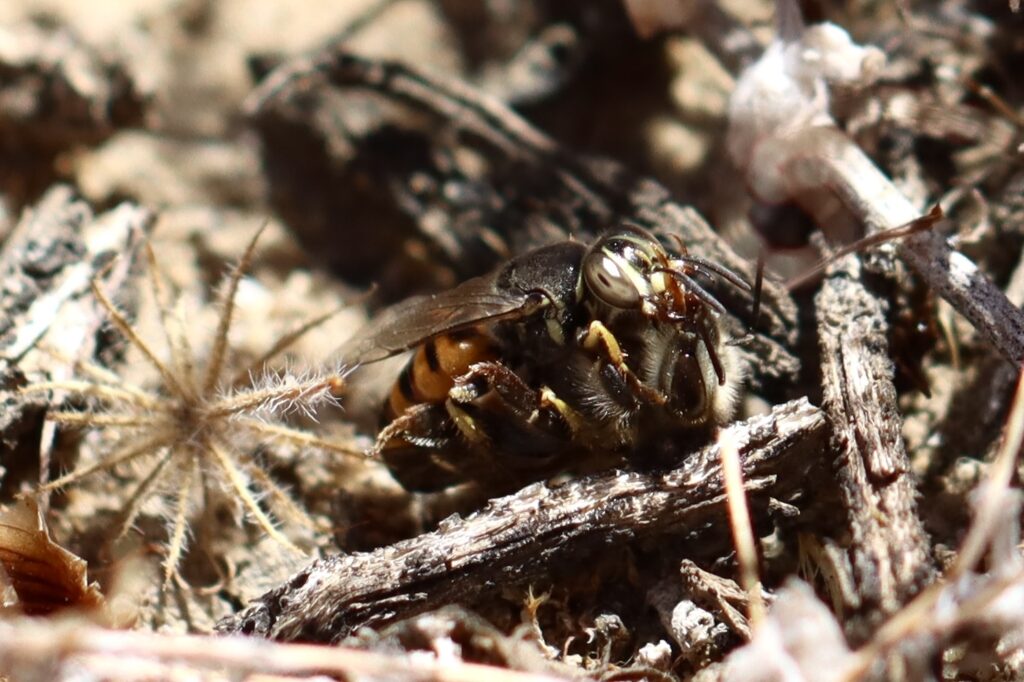
Tiny Bembix at its nest site on the dry riverbed.
These conditions make it an ideal nesting habitat for species that favour sandy, well-drained ground. In the Karoo, such conditions are common along ephemeral rivers where sand wasps like Bembix dig into the sediment, and for ground-nesting bees, which constitute the majority of solitary bee species globally.
A riverbank is more than a physical feature; it’s a living record of time. Its layers mark past floods and long droughts, changes in vegetation, even ancient climates. In South West Angola, I recently stood before cliffs that revealed stories from a different era, telling of vanished seas, holding fossils of mosasaurs and plesiosaurs in their bone-beds. Here in the Karoo, there are riverbank stories that are still very much alive, written in sand and clay, and unfolding in the form of bees and their intricate communities.
At first glance, a sandy riverbank here looks unremarkable as a sheer wall of compacted earth, a few tufts of grass, roots, the odd shrub, and a scattering of stones. But come closer on a warm spring morning and the surface moves to a low, vibrating hum. Holes dot the bank like pinpricks, and from each one, bees emerge, darting into the air before disappearing again. What seems like just an eroded sandbank is, in fact, a thriving bee aggregation.
Nesting in such dense groups might seem, from an evolutionary standpoint, a bad idea. Parasites and predators quickly notice abundance. Yet these aggregations persist. The very feature that seems risky is what makes the system thrive.
A Spring Awakening
Anthophora wartmanni bees nesting in the river bank
By early September, activity on one such bank at Wolwekraal Nature Reserve is at its peak, continuing through October. It hosts a dense aggregation dominated by Anthophora wartmanni Friese — shaggy, flower-loving digger bees, large-bodied and fast-flying.
The females work tirelessly, provisioning their larvae with pollen and nectar, navigating back to the correct burrow guided by scent. Occasionally one makes a mistake, entering the wrong tunnel before backing out almost immediately, suggesting that each nest carries its own unique chemical signature.
The Anthophora may be the most conspicuous residents, but they are not alone. The same bank also supports populations of Megachile (leafcutter bees), Amegilla, Plesianthidium, and Afroanthidium species, each with slightly different nesting needs and seasonal timing.
Top row (left to right): Anthophora, Megachile, Pachyanthidium. Bottom: Anthophora wartmanni.
Inside the bank lies a maze. Many burrows branch into two or more tunnels, a network that offers opportunity and danger in equal measure. Parasitic wasps such as the metallic cuckoo wasps (Chrysididae) and the velvet-armoured mutillids use their smaller size to slip between tunnels, entering one hole and emerging from another. The larger bees are confined to their own passages, always using the same entrance.
Nest entrance holes in the riverbank, some with several passages branching from the main tunnel.
Anthophora male warming up.
Male bees of several species patrol the bank, flying back and forth in search of emerging females. It’s an efficient mate-location strategy and for some species seems better than waiting around at flowers, though it does mean that predators quickly learn where to find them.
The Parasites and Their Strategies
Dense nesting aggregations attract a diverse gathering of parasites and kleptoparasites, each exploiting the concentrated resource of provisioned brood cells.
Velvet Ants
Wingless female mutillid wasp, also shown here dusted with pollen after visiting a bee nest cell.
Among the most conspicuous visitors are the so-called “velvet ants” — female mutillid wasps, wingless, densely hairy, and quick-moving. They scurry over the sand in the midday heat, pausing briefly to inspect a burrow entrance before moving on. Their mission is simple but effective: find a bee’s nest, slip inside, lay an egg on the host’s larva, and leave. The developing mutillid eats the larva and its food supply. Adults, oddly enough, feed only on nectar, a dramatic dietary shift from meat to sugar that would confound most nutritionists.
A female mutillid wasp moves swiftly between the bee tunnels
Male mutillids, in contrast, keep their wings and were often seen inspecting nest entrances, probably in search of emerging females rather than hosts. This strong difference between the sexes, with winged males and wingless females, reflects how each has evolved for a different purpose: males to locate mates and females to locate hosts.
Winged males look into nest entrances, searching for emerging females
Cuckoo Wasps
Then there are the chrysidid wasps, shimmering metallic-green under the Karoo sun. The flashiest of these wasps glitter in brilliant hues of emerald, turquoise and copper. Their colours are structural — microscopic prisms in the cuticle refract light so that even a dead specimen never fades (C. Eardley, pers. comm., 30 September 2025). They slip in and out of bee tunnels, sometimes reappearing some distance away. One pair was seen mating near the bank, suggesting that for the parasites, this place serves as both hunting ground and courtship arena.
Several species of metallic-green cuckoo wasps (Chrysididae).
Cuckoo Bees
A Coelioxys bee — a cleptoparasite that lays her eggs in the nests of other leafcutter bees.A Thyreus bee — the strikingly patterned “cuckoo bee” that lays her eggs in the nests of Amegilla species.
Cuckoo bees, including Thyreus and Coelioxys, are also regular visitors. They specialise in parasitising species like Anthophora and Amegilla. Their method differs slightly from that of the wasps: they lay their eggs in completed brood cells, leaving their larvae to consume the pollen store rather than the host larva itself. Either way, the intended offspring loses, with the host larva eventually starving.
Flies
A parasitic bee fly (Bombyliidae) investigates a nest entrance, collecting sand to coat its eggs before flicking them into bee burrows.
Flies join in with characteristic ingenuity. Bee flies (Bombyliidae) hover near entrances, flicking sand-coated eggs toward burrows. The sand adds weight, propelling the eggs deeper and preventing them from drying out. Once inside, the tiny larva seeks out the host’s brood and parasitises it.
Tachinid flies such as Rondanioestrus apivorus take a more direct approach: their eggs hatch almost instantly, and the larvae burrow into returning bees, developing inside their hosts. Efficiency comes in many forms.
Left: A tachinid fly (Rondanioestrus apivorus) lies in wait on the river bank, watching for returning foragers and, right, flying close to a nest entrance.
Predators and Opportunists
Ants
Ants are part of the story too. Their nests lie directly beneath the bee aggregation, and they emerge late afternoon as temperatures moderate and bee activity declines. Small ant species such as Anoplolepis steingroeveri and the larger, square-headed Tetramorium were observed carrying bee larvae from Anthophora tunnels, possibly scavenging or predating on brood cells damaged during excavation or parasitism. They were remarkably adept at transporting larvae down the steep vertical walls to their nests below. Sometimes their activity caused partial blockages in the bee tunnels, leaving some Anthophora females hovering at the entrances or trapped inside.
Among them, the Balbyter ant was also recorded. Ants likely play a dual role: as opportunistic predators on vulnerable brood and refuse removers, carrying off dead larvae and decaying provisions, like pollen. Their late-afternoon peak in activity minimises direct confrontation with actively provisioning bees.
A Balbyter ant (Camponotus fulvopilosus) pauses at the entrance of a bee burrow — part scavenger, part predator, and always alert to opportunity.An ant drags away a pollen ball, recycling what’s left behind
Other Hunters
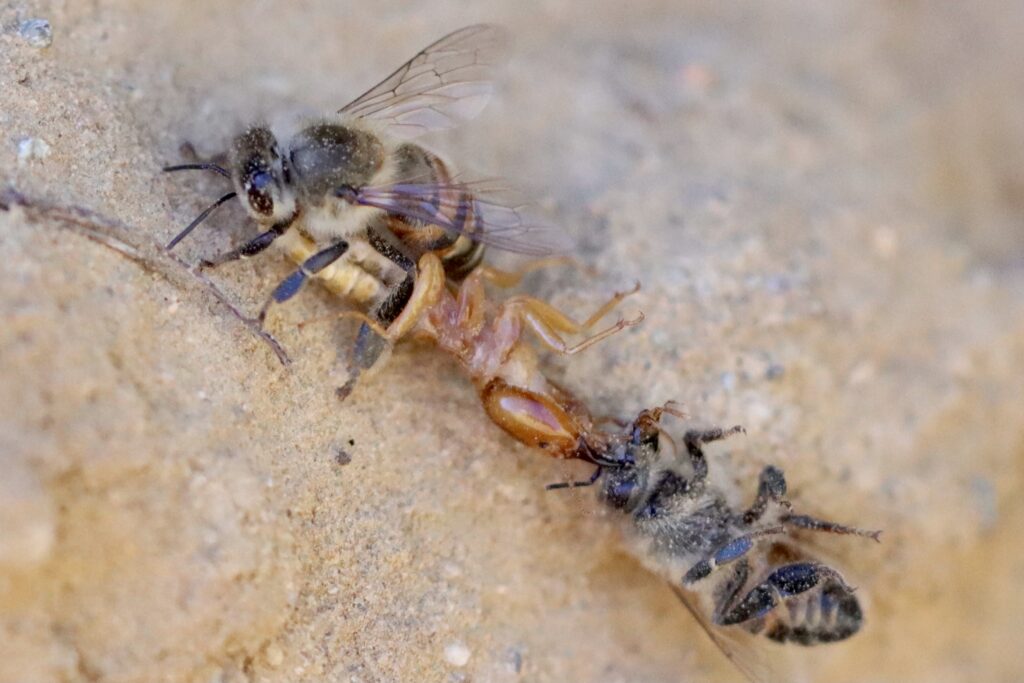
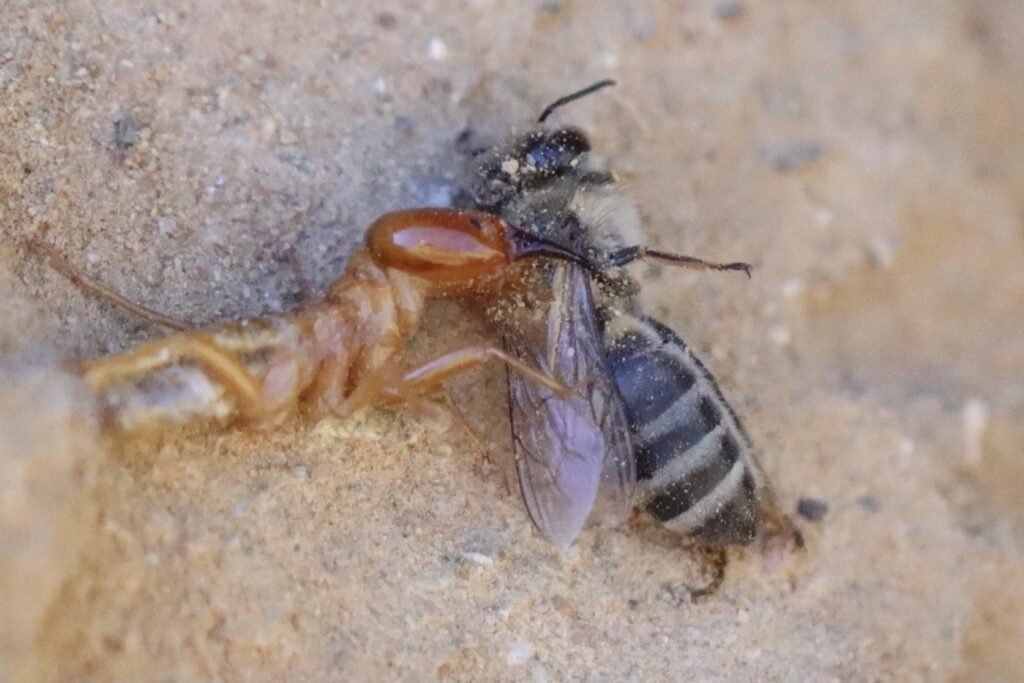
A solifuge, one of the lightning-fast, spider-like sun spiders was spotted nearby. These arachnids can subdue adult bees, though they more often hunt smaller prey. Karoo scrub-robins (Cercotrichas coryphaeus) were also seen foraging along the bank, gleaning ants from the ground, bees from flowers nearby, and scanning the vertical surface for movement. It’s a reminder that vertebrates, too, are part of the system.
Shifts Through the Day
Activity at the aggregation follows the sun. At midday, when the sand is too hot for ants, bees are most active. As the sun lowers, bees retreat, ants emerge, and birds intensify their foraging. This daily rhythm allows many species to share the same narrow strip of habitat without direct competition.
Early in the morning, female bees rest on the sand, absorbing warmth before flying off. It makes them visible to predators, but in the cool Karoo mornings, it’s essential for warming their flight muscles.
A Living System
The more time I spent at this riverbank, the more its complexity unfolded. It’s a place where a diversity of species interact in patterns shaped by millions of years of coevolution. Bees emerge from countless burrows. Parasitic wasps patrol the surface. Flies hover at entrances. Ants appear and become abundant in the late afternoon. Birds scan the sides of the riverbank for movement. The aggregation exists because every element aligns perfectly: the substrate is right, the bank catches the early morning sun, and the site lies within reach of flowers. Change one variable and the system falters. That fragility is what makes biodiversity conservation so complex, and so essential. It’s not enough to save species in isolation; we must protect the very places that make their coexistence possible.
Dry riverbeds and eroded banks like this one are far more than geological features in the Karoo. They are irreplaceable threads in a vast ecological fabric. Edges where life concentrates, adapts, and thrives. In protecting these fragile corridors, we protect the processes that create diversity itself.
Aggregations as Ecological Hubs
Why do bees nest in dense groups when it attracts so many enemies?
When solitary bees nest in dense groups, they face greater risks: parasites, kleptoparasites (like Thyreus), predators, and even competition for space. From the outside, it seems counterintuitive. Why not nest alone, far from danger?
But these dense aggregations also bring key advantages, which is why they persist:
Safety in numbers: Predators and parasites become diluted across hundreds of nests. Each individual bee’s chance of being targeted decreases.
Environmental advantages: The bees tend to choose the best microhabitats — in this case, the warm, stable riverbank soils that make nesting and brood development more successful.
Social cues: Bees can locate suitable sites by following others or detecting the scent of past nesting activity, saving energy and risk in finding a new site.
Mating opportunities: Males and females find each other more easily around aggregations.
Evolutionary innovation: The close proximity of many species and individuals fosters complex ecological relationships, from parasitism to species learning how to coexist, that drive adaptation and diversity.
So, what seems risky (high predation and parasitism) is also what creates ecological richness and resilience. The “greatest risk” (clustering together) becomes the “greatest strength” (a dynamic, evolving system that sustains itself through diversity). Aggregations like this function as natural laboratories for studying coevolution, host-parasite dynamics, and community assembly. But they’re also conservation priorities. These systems depend on dynamic landscapes like seasonal flooding, bank erosion, substrate renewal. Stabilising riverbeds or preventing natural erosion eliminates the very processes that create nesting habitat. Understanding solitary bee ecology is urgent as they’re critical pollinators globally, yet far less recognised and studied than honeybees or social species. This dry riverbank, so easily overlooked, teaches us that biodiversity isn’t just about individual species. Rather, it’s about the landscapes that bring communities together and the processes that maintain them.
How These Predatory Wasps Use Honeybees to Fuel Their Survival and Reproduction.
Karin Sternberg
Survival and reproduction come with tough choices for many animals, and both parasitic and predatory wasps—like Palarus latifrons—are no exception. They rely on two key resources: hosts or prey for their offspring, and sugar to fuel their own bodies and activities. Since these resources are often found in different locations, wasps must carefully divide their time between hunting and feeding. With short lifespans and limited or unpredictable resources, every decision counts—should they pursue prey or stop to refuel? The choice can have a significant impact on their survival and reproductive success in the wild.
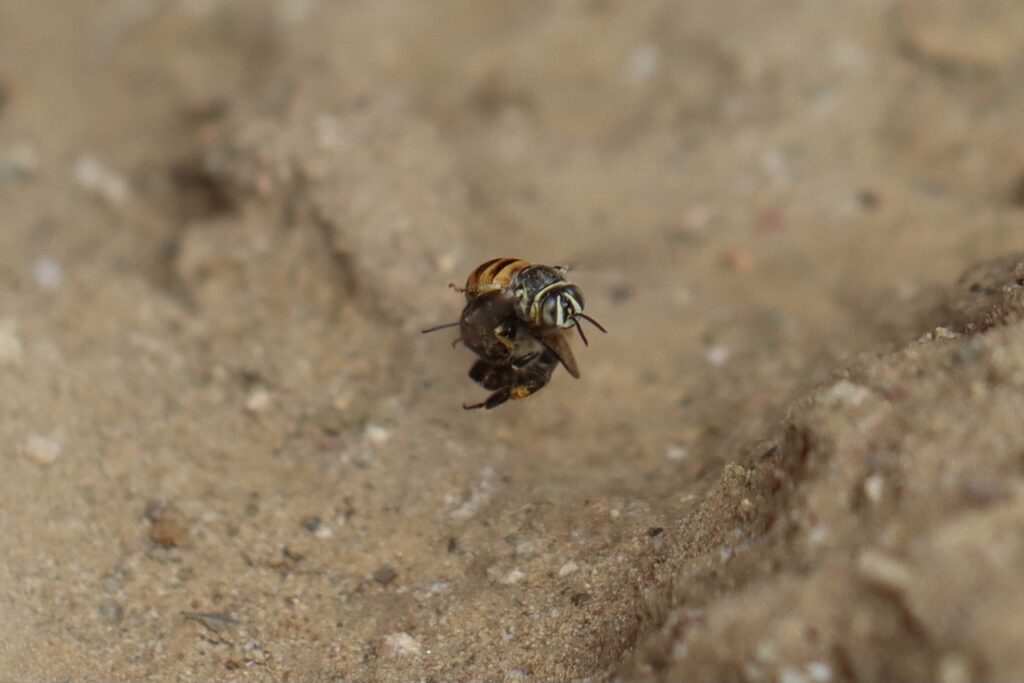
Among predatory wasps, Palarus latifrons exhibits particularly striking hunting strategies, preying on honeybees (Apis mellifera), capturing them mid-flight and immediately paralysing them. Subdued bees are then carried to the wasp’s nest, where several paralysed bees are stored in a chamber. A single egg is laid on one of them. The stored prey provides nourishment for the developing larva, until it reaches the pupal stage. After pupation, the fully developed adult wasp emerges from its cocoon.
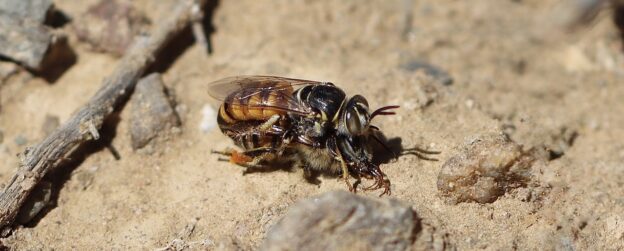
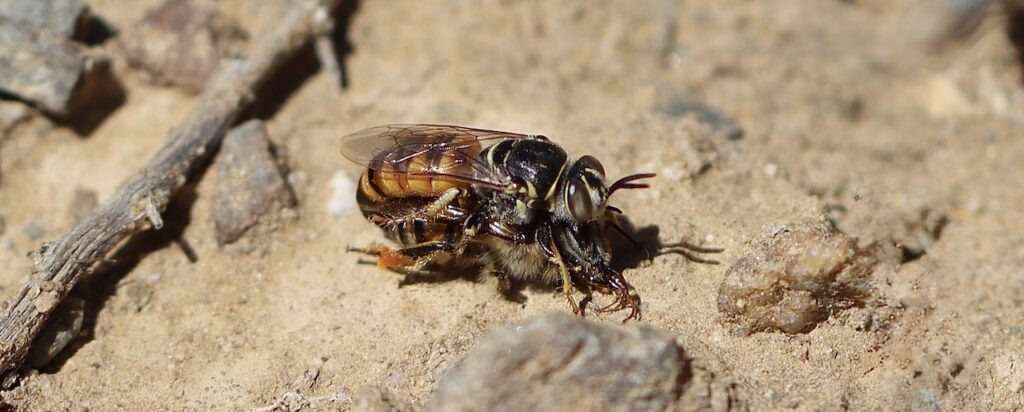
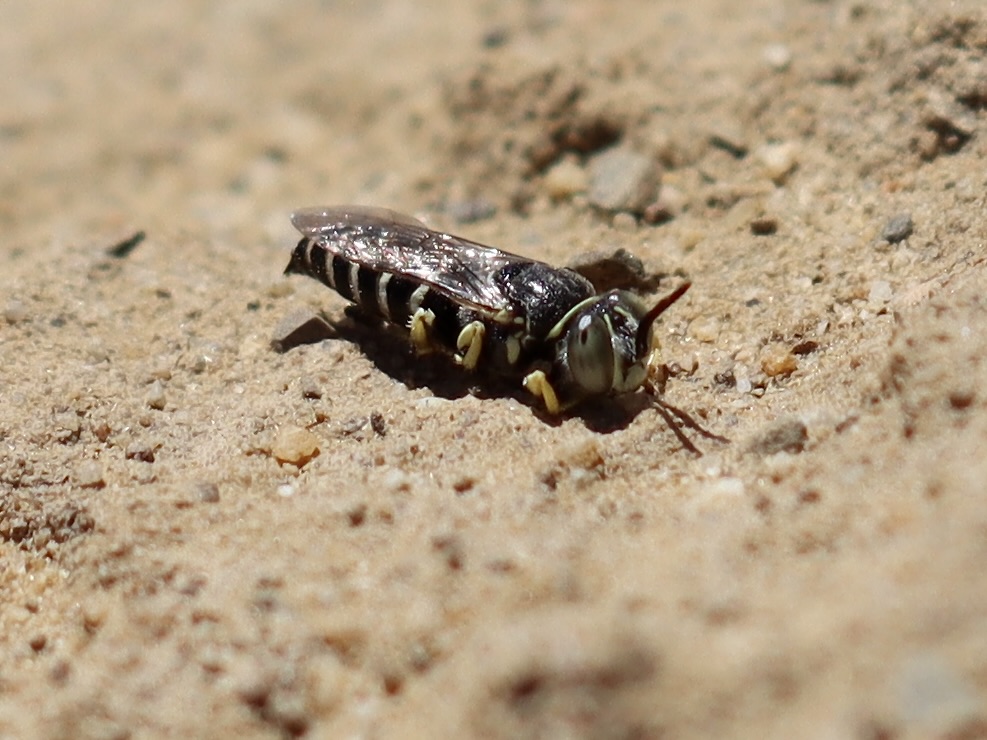
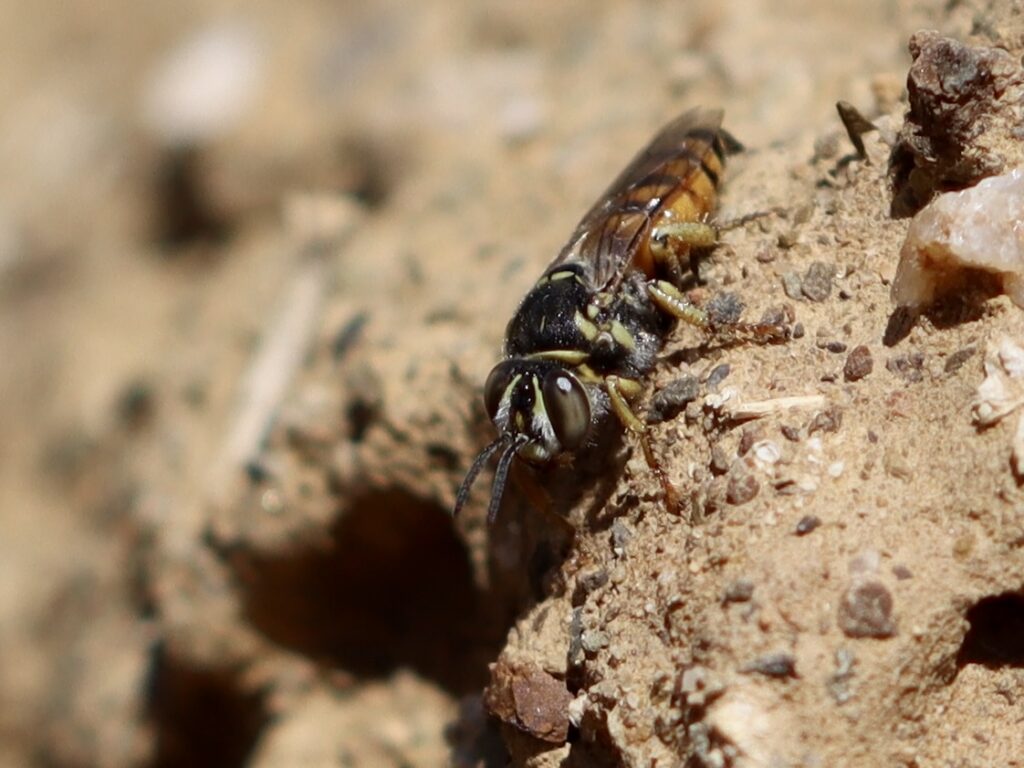
Palarus latifrons malePalarus latifrons female
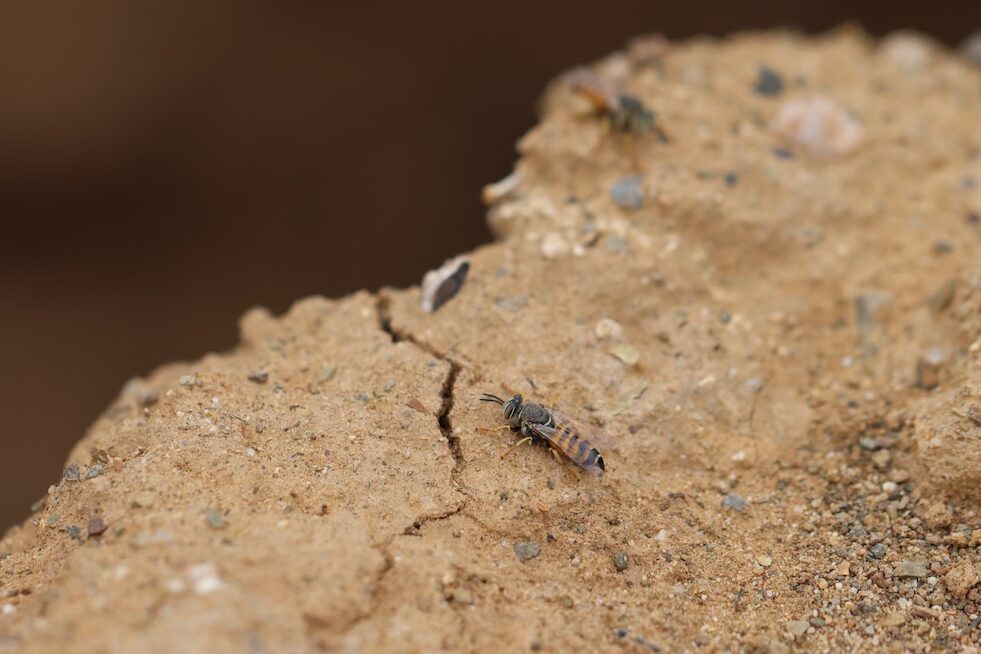
Palarus latifrons is a medium-sized solitary wasp with a robust body. The female has distinctive black and yellow bands on its abdomen, whereas the male has a black and white banded pattern and is generally smaller than the female. The thorax is usually black and their broad faces have porcelain-like markings (lati- means broad, -frons means forehead or front in Latin). Palarus latifrons is indigenous to Sub-Saharan Africa, however, its distribution extends from the Cape to as far north as Ethiopia and the Arabian deserts of mainly the Arabian Gulf countries. These wasps have adapted well to desert conditions where their activity is high in the hot and dry summer months. Its predatory behaviour has earned it the common name “Banded Bee pirate” (BBP). While it is known to target managed hives, very little has been documented about its interactions with wild honeybee nests.
Hunting for their offspring
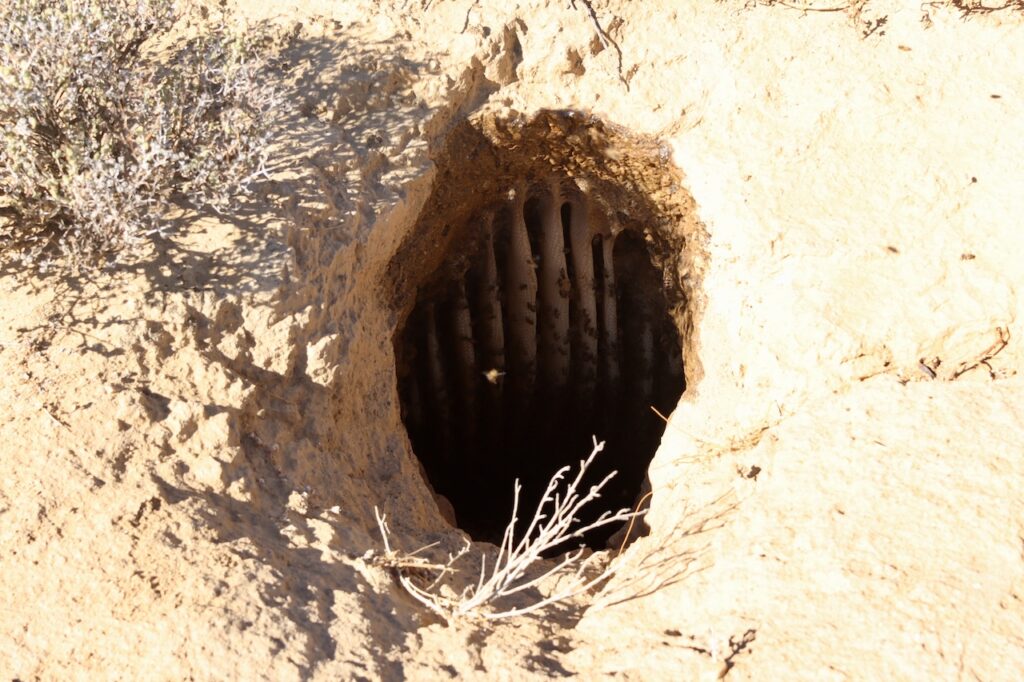
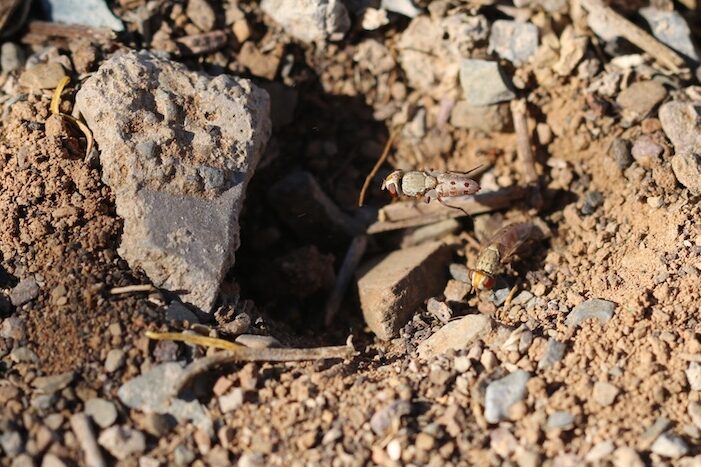
At Wolwekraal Nature Reserve on the edge of the Great Karoo—a region considered a desert with annual rainfall less than 200 mm—3 of the 5 wild honeybee nests in deserted aardvark burrows were visited by BBPs, both female and male. One of the nests had up to 8 BBPs hunting around midday. From December through February, maximum temperatures climb to the upper 30 and low 40°C range. Ground temperatures can reach over 50°C. The BBPs use the heat of the sand to gain thermal energy, often flattening their bodies to increase surface area and maximise heat absorption. When warmed up they are capable of hunting at optimal temperature.
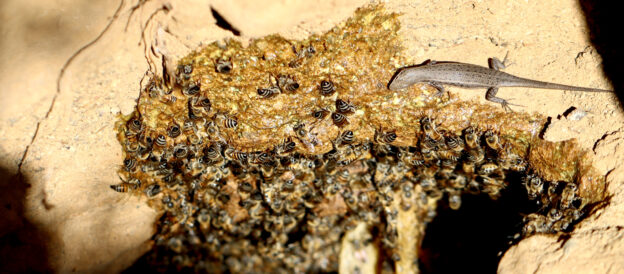
One of the wild honeybee nests inside an abandoned aardvark burrow.Female Banded Bee Pirate wasp soaking up the Karoo heat on the edge of the burrow entrance.
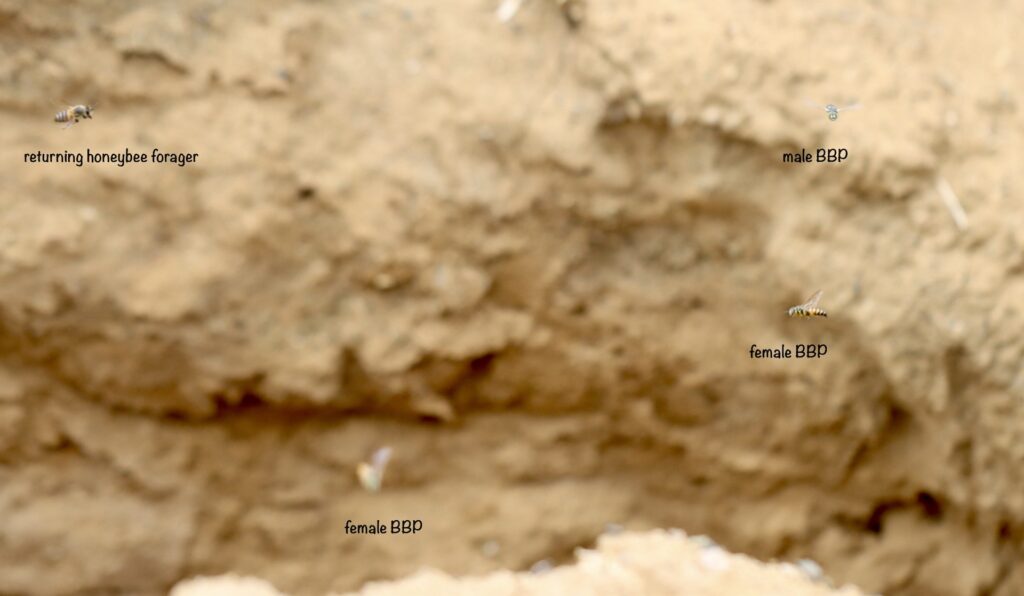
This wasp has a formidable hunting technique. As an agile flier, the BBP is able to crisscross hive entrances of managed bee colonies, while at wild nests located in burrows, wasps dart, in swooping, circular patterns over the nest opening, sometimes diving deep into the burrow and then flying sharply upwards attempting to intercept returning foragers. Notably, no direct attacks on bees clustered on the comb at wild nests were observed.
A returning forager to her nest faces two female BBP wasps, with a male BBP nearby watching a female.
The wasp captures and subdues its prey midair, primarily targeting bees returning from foraging. However, it has also been seen persistently taunting and luring bees out of hives, striking as soon as a bee steps away from the colony. With its long, slender body, the BBP can position itself advantageously to deliver a sting. Still, honeybees sometimes manage to overpower and sting a BBP to death. Where BBP population densities are high—such as at apiary sites in the Porterville area, where we counted an average of 50 BBP wasps per hive—they can severely impact bee colonies, leading to significant honeybee losses. In a study carried out in front of a hive in the Kalahari, researchers killed 131 BBP wasps within 75min.
Female BBP wasp captures a forager with pollen still on her legs at the nest entrance.
The presence of these wasps near hives and at wild nests, is thought to induce either a ‘moaning’ sound by the bees, or a distressed ‘piping’ sound. The distress signals as recorded at the Porterville apiary site were intense and acute. Here, foraging activities halted entirely and many of the bees formed a defensive line across the hive opening, preventing BBPs from entering. At a wild nest on Wolwekraal, short, singular piping sounds were heard in the presence of the BBPs. BBP numbers were meagre and not all foraging ceased, but fewer foragers were seen leaving the nest.
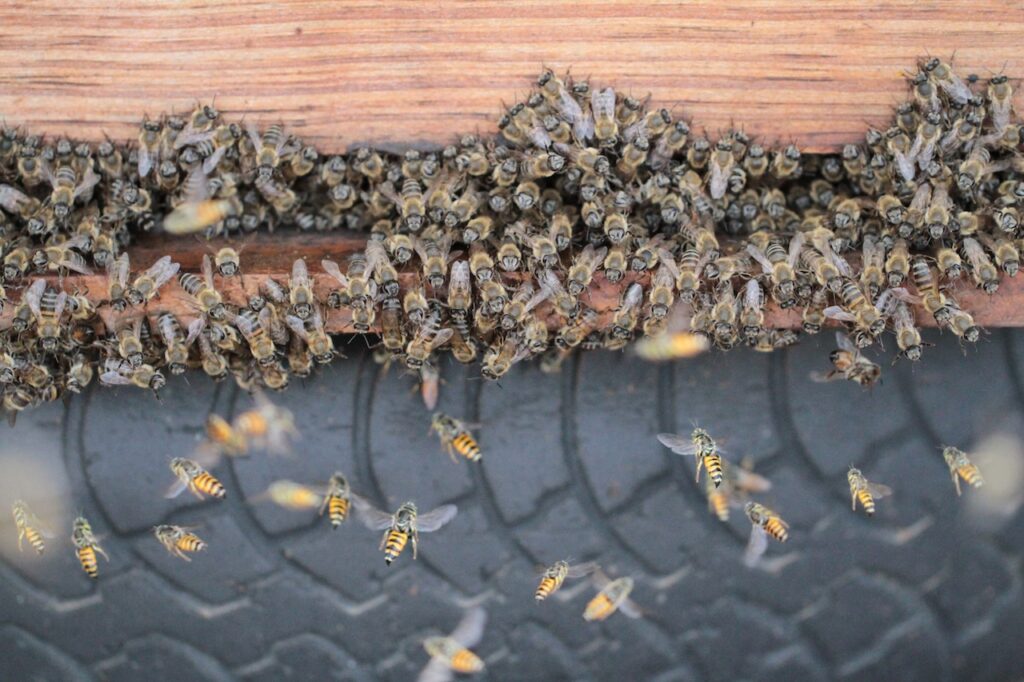
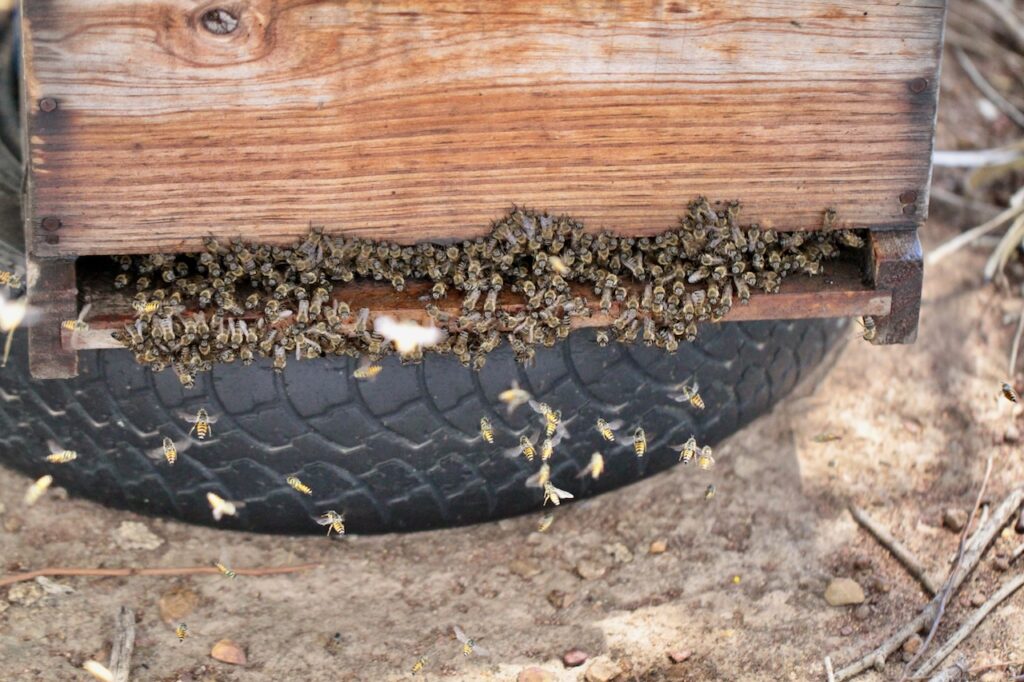
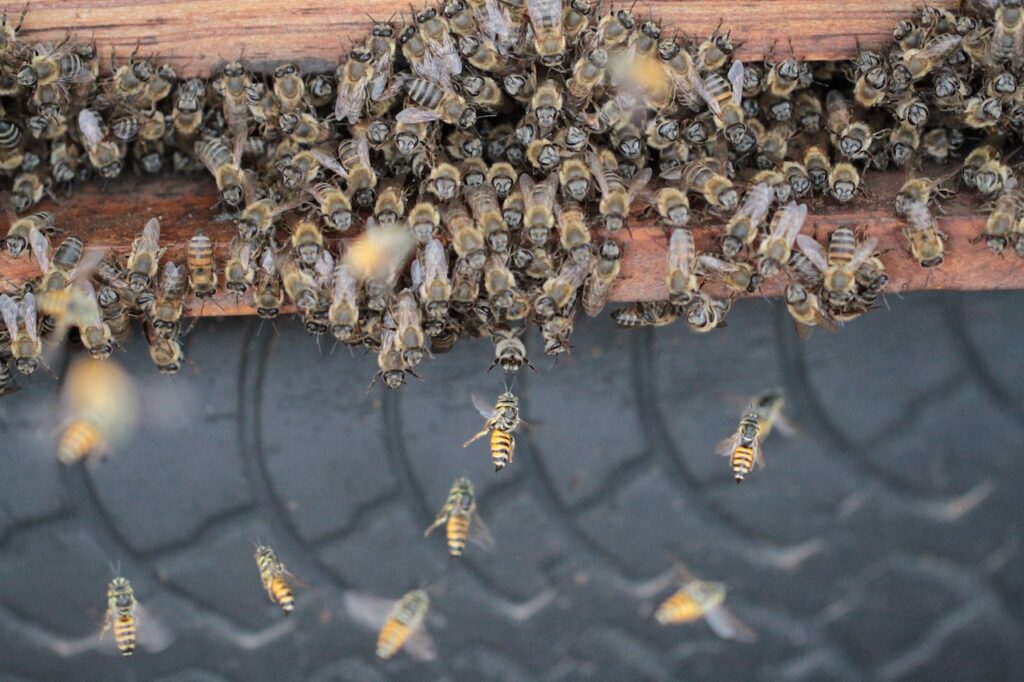
BBP wasps are found in high numbers at apiary sites in hot and dry regions, drawn to a concentration of managed hives. Notice the multitude of wasps flying in front of the defensive line of honeybees in the hives. In contrast, only a few BBPs are typically observed at wild honeybee nests, where colonies are more dispersed across the landscape.
SOUNDS FROM A HIVE:
In the presence of hordes of BBP wasps, these are the distress signals emanating from a hive. Listen for the high-pitched piping sounds.
SOUNDS FROM A WILD HONEYBEE NEST:
Sounds emanating from a wild nest in the presence of a few BBP wasps. Listen closely for the short piping sounds in the background.
BBP wasps are, however, not solely dependent on having to find honeybee nests and have been seen widely dispersed. An observational study in the Tanqua Karoo, recorded BBP wasps at flowering Vachellia karroo trees and water seeps. These seepages attract a diverse array of species, including wasps, solitary bees and honeybees, especially during the hot, dry summer months. At these seeps, BBP wasps were seen carrying off honeybees. Vachellia karroo in bloom serves as a key resource attracting numerous pollinators.
Water as a limiting resource
Water is the most limiting resource for all living creatures, a challenge intensified in desert regions where resources are scarce across both time and space. Wasps require water for survival, but they do not rely solely on seepages or riverbanks to obtain it. Research on water-deprived parasitic wasps (Pachycrepoideus vindemmiae) describes a water-intake strategy whereby the researchers observed increased feeding by the wasps on the water-rich :haemolymph of their hosts, :Drosophila suzukii larvae, for nourishment, in this case, to obtain water. This led to more host (larval) mortality, because the host-feeding by the wasps to sustain themselves with water (and not just to provide food for their offspring) killed the larvae. The paper notes, that these are interesting findings, not only because water has rarely been reported as a critical nutrient for adult wasps, but especially because using prey for the purpose of hydration does not appear to be a common strategy in nature. Or is it more common than thought?
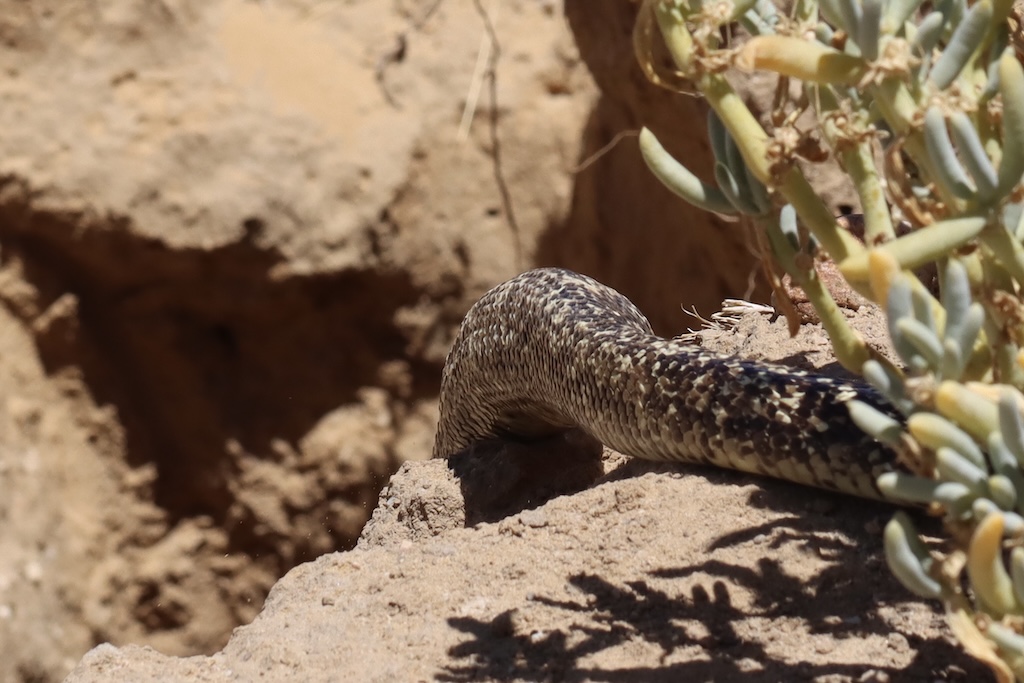
Cape cobra, belly full—likely from a rodent—slips into an abandoned aardvark burrow, once home to a wild honeybee nest. Snakes obtain much of their water from the body fluids of their prey.
The Karoo’s extreme conditions demand remarkable adaptations from its inhabitants, with resident fauna deriving most of their body water from their food. The Cape cobra (Naja nivea) meets its water needs almost entirely through the moisture derived from the body fluids and tissues of its prey. Africa’s largest rodent, the Cape porcupine (Hystrix africaeaustralis), has developed a different strategy to cope with water scarcity—digging up and consuming dwarf succulents to access their moisture. Our observations of Cape porcupine diggings on Wolwekraal revealed an intense foraging pattern. It is also speculated that the eight-year drought in the Karoo from 2015 to 2023, forced porcupines to forage on aloe stems to access both moisture and food.
Besides water for hydration, nest cooling, humidity regulation, larval nourishment, and nest building in bees and wasps, every organism requires energy to survive. Honeybees rely on a steady intake of food to fuel their daily activities—from foraging and flying, to maintaining the nest and producing honey.
Fuelling their behaviour with an energy-rich resource
Foraging demands exceptional cognitive and flight abilities, requiring high metabolic and aerodynamic power. Nectar, a sugar-rich liquid produced by the glands—or nectaries—of flowering plants, provides the necessary energy. Foraging bees collect nectar using their long proboscis (or tongue) and store it in their honey stomach before returning to the nest. Nectar typically has a high water content, usually between 50% and 80%, depending on the plant species. Honeybees process this nectar through regurgitation, enzymatic fermentation, and evaporation to produce honey. Like bees, adult wasps, require quick and significant energy for flying and hunting, which they often obtain from flower nectar or other carbohydrate sources, such as honeydew from aphids, overripe or fermenting fruit, and tree sap.
BBP wasp poised at the burrow entrance, with the comb of a wild honeybee nest visible in the background.
At Wolwekraal, BBP wasps were observed not only capturing prey at wild honeybee nests, but also fulfilling their second key requirement for survival and reproduction: obtaining sugar for energy. While the behaviour of BBP wasps extracting nectar directly from honeybees has been documented in writing, unique footage captured the extraordinary moment, providing a visual record of this fascinating interaction that, to my knowledge, has never been captured before. By preying primarily on returning foragers, these predatory wasps secure nourishment for their larvae, and access to energy-rich nectar and water. The latter is particularly vital in arid regions where water becomes scarce during the peak of summer and flowering plants are few and far between.
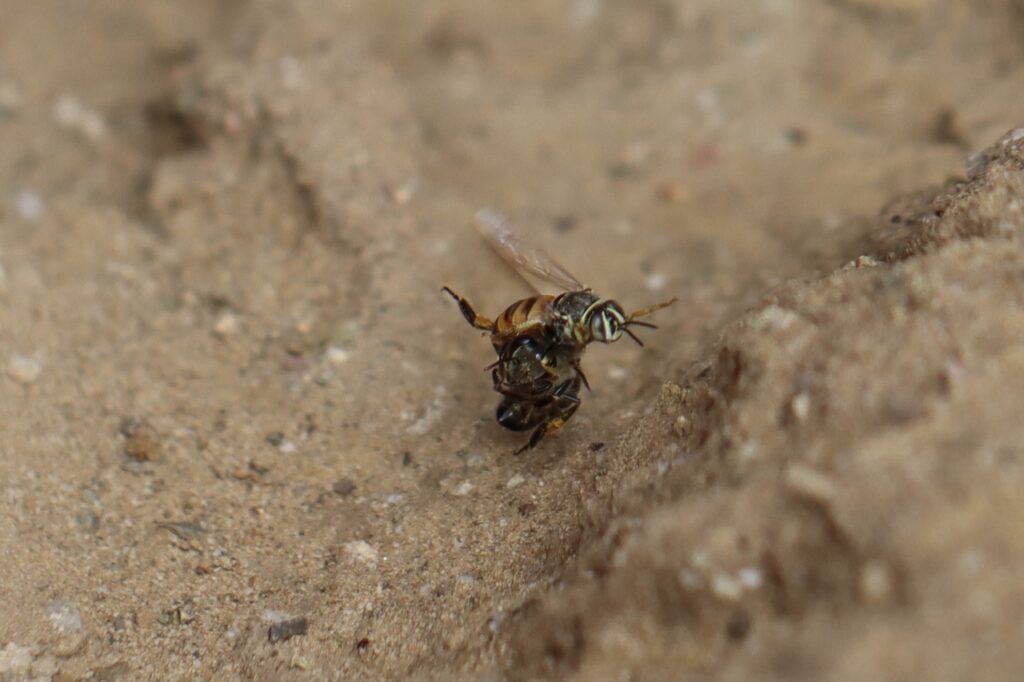
The BBP wasp forces open the mouthparts of the captured bee to extract nectar.
The captured bee is not always carried away to the nest but is sometimes used only as a food source. After stinging the bee, the wasp waits for it to calm down before beginning a mouth-to-mouth feeding procedure. The BBP forces open the bee’s mouthparts and, by pressing down on the bee’s abdomen, forces out the crop contents, effectively robbing it of its collected nectar. After this, the BBP either leaves the dead bee to resume hunting or, once suitably positioned, flies back to its nest with the bee. The BBP digs tunnels in the ground in especially sandy, granular soils. Inside the nest, the wasp provisions a chamber within its burrow with up to five bees, laying an egg on the mass before sealing the chamber and proceeding to provision the next one. While only females were documented exhibiting this nectar-robbing behaviour at Wolwekraal, records indicate that male BBPs also engage in this behaviour.
Slow-motion footage (50% speed) capturing the extraordinary moment a female Banded Bee Pirate wasp forces open a honeybee’s mouthparts to extract nectar—a rarely seen interaction between predator and prey.
The path back to the nest is not always easy for the BBP and its prey. In nature, especially under extreme conditions, hazards abound and opportunities must be seized. At Wolwekraal, this duo racing through the sky is often followed by a scurry of small jackal flies, flying just below the honeybee. These kleptoparasitic milichiid flies (Desmometopa spp.) feed on nutrient-rich haemolymph and are known for stealing food from other insects. They are thought to be attracted by a chemical pheromone released by the stressed honeybee and must fly rapidly to keep pace with the much larger predatory BBP.
In the Tanqua Karoo, a small aggregation of six BBP nest entrances was observed within a 20 cm × 6 cm area. Kleptoparasite flies were spotted congregating at the entrances of the BBP nests. These flies were likely Craticulina seriata, known kleptoparasites of sand wasps. They lay eggs that hatch immediately, with the larvae feeding on the honeybee prey. The observations also revealed a BBP returning to its nest, carrying a drone—the much larger male honeybee.
Kleptoparasites, Craticulina seriata, at the entrance to a BBP nest. Photo by Geoff Tribe.
The role of male BBP wasps at wild honeybee nests remains unclear. Like honeybee drones, males lack a sting. They often chase female wasps, possibly mating near the nest, and sometimes mistakenly pursue honeybees. This results in chaotic, fast-paced activity above the nest entrance.
The need for a balanced ecology
Observing the ecological dynamics around :wild honeybee nests offers valuable insights. The presence of large numbers of BBP wasps at apiary sites raises serious concerns. These wasps, known for their mass attacks on managed honeybee colonies, exploit the high-density clustering of hives, particularly in arid environments where resources are limited. Their predatory behaviour is intensified in these artificial settings, leading to significant colony stress, as evidenced by the increased defensive responses and distress signals from the hives. While wasps serve a critical role in ecosystem regulation, their population dynamics are highly responsive to environmental conditions, sometimes tipping the balance in their favour. This highlights the importance of conserving wild honeybees in their natural habitats, where intrinsic ecological balance helps regulate predator-prey interactions without human interference.
REFERENCES
Al-Khalaf, A. (2021). Modeling the potential distribution of the predator of honey bees, Palarus latifrons, in the Arabian deserts using Maxent and GIS. Saudi Journal of Biological Sciences28(2).
Arena, G. And Milton, S. J. (2025). Impact of drought-induced herbivory by Cape porcupine on Aloe claviflora on the Wolwekraal Nature Reserve, Prince Albert. Journal of Arid Environments227 (2025) 105337.
Bernstein, C. (1996). Time sharing between host searching and food searching in solitary parasitoids: state dependent optimal strategies. Behavioral Ecology7(2):189-194.
Bezerra Da Silva, C.S., Price, B.E. and Walton, V.M. (2019). Water-Deprived Parasitic Wasps (Pachycrepoideus vindemmiae) Kill More Pupae of a Pest (Drosophila suzukii) as a Water-Intake Strategy. SciRep 9, 3592.
Clauss, B. (1984). The status of the Banded Bee Pirate, Palarus latifrons, as a honeybee predator in southern Africa. Paper presented at the Third International Conference of Apiculture in tropical Climates, Nairobi.
Dean, W. R. J. And Milton, S. J. (2004). The Karoo. Ecological patterns and processes. Cambridge University Press. 374 pgs.
Heiduk, A., Brake, I., Shuttleworth, A. and Johnson, S.D. (2023). ‘Bleeding’ flowers of Ceropegia gerrardii (Apocynaceae-Asclepiadoideae) mimic wounded insects to attract kleptoparasitic fly pollinators. New Phytologist 239(4).
Mally, C. W. (1908). Bee Pirates. Agricultural Journal of the Cape of Good Hope33(2): 206-213.
Skaife, S. H.(1979). African Insect Life. Struik 279 pgs.
Surviving the Karoo: resilience in a harsh environment
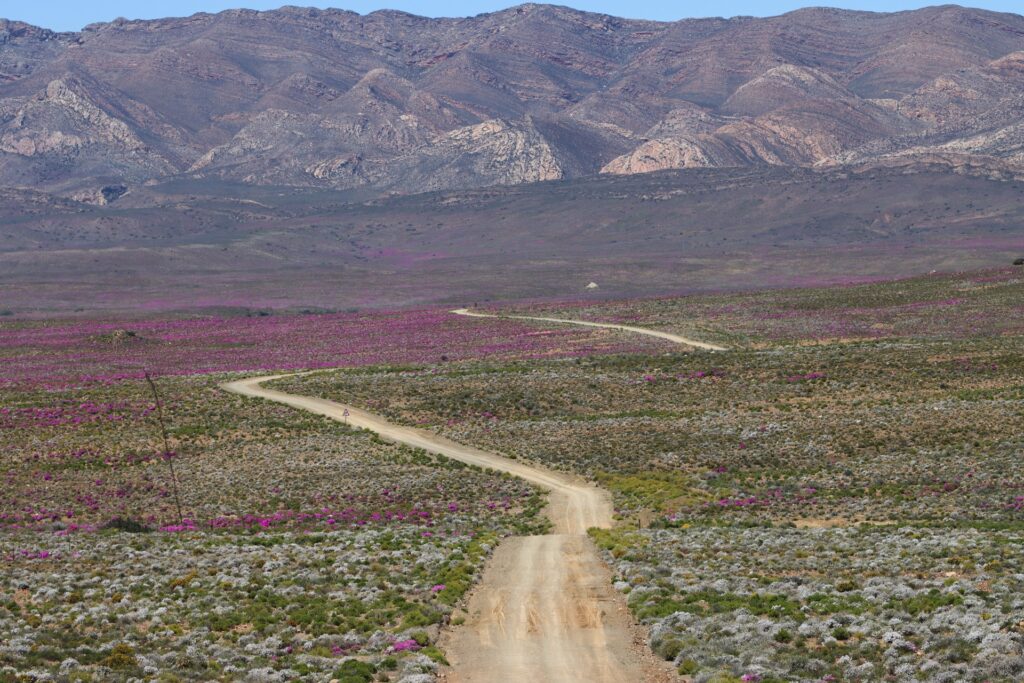
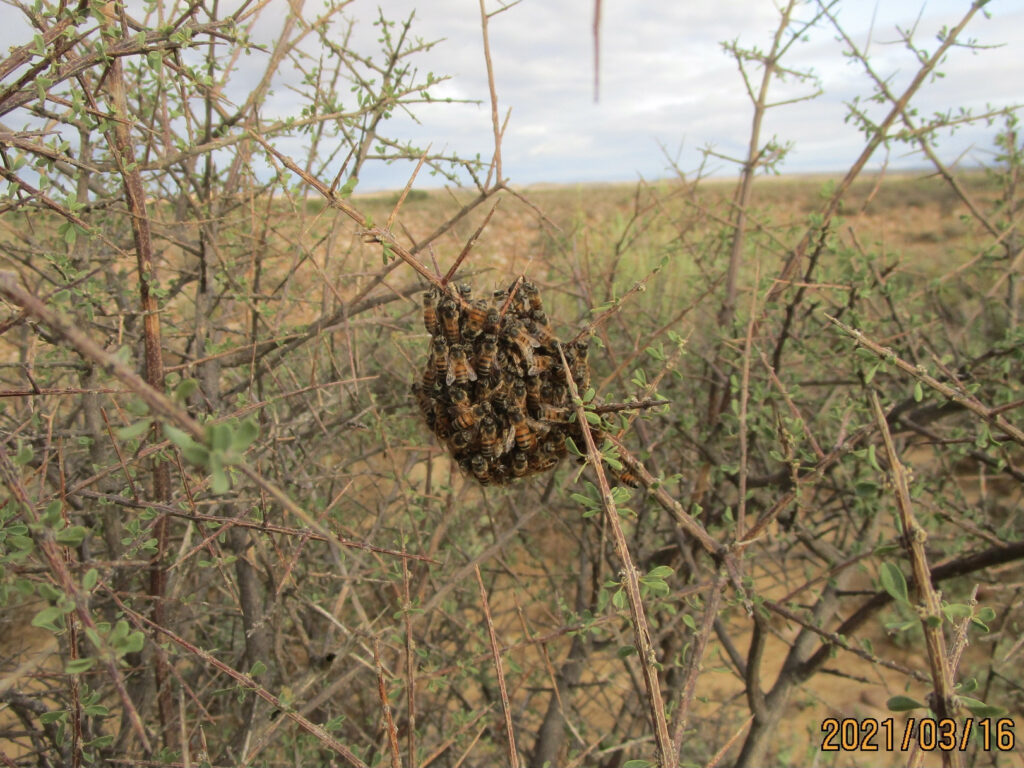
Being a bee on the Karoo plains is challenging. The Karoo is a boom and bust environment with short periods of spectacular productivity and long periods of drought and famine. Plants survive the droughts as seeds in the soil, or as long-lived small shrubs that are able to reduce their water needs to the minimum by discarding leaves, storing water and desisting from flowering and grow for months or years as need be. Nomadism is/was the preferred option for many birds and larger mammals, whereas many reptiles and invertebrates wait out the tough times in underground burrows reducing their activities to the minimum to save energy and water. Populations of small mammals follow boom and bust cycles in unison with the weather with numbers dwindling in drought and growing exponentially in the good times.
A small Apis mellifera capensis swarm two days after rain.
A forager feeding on nectar of ou rambos (Tetraena retrofracta)
Honeybees as cavity dwellers
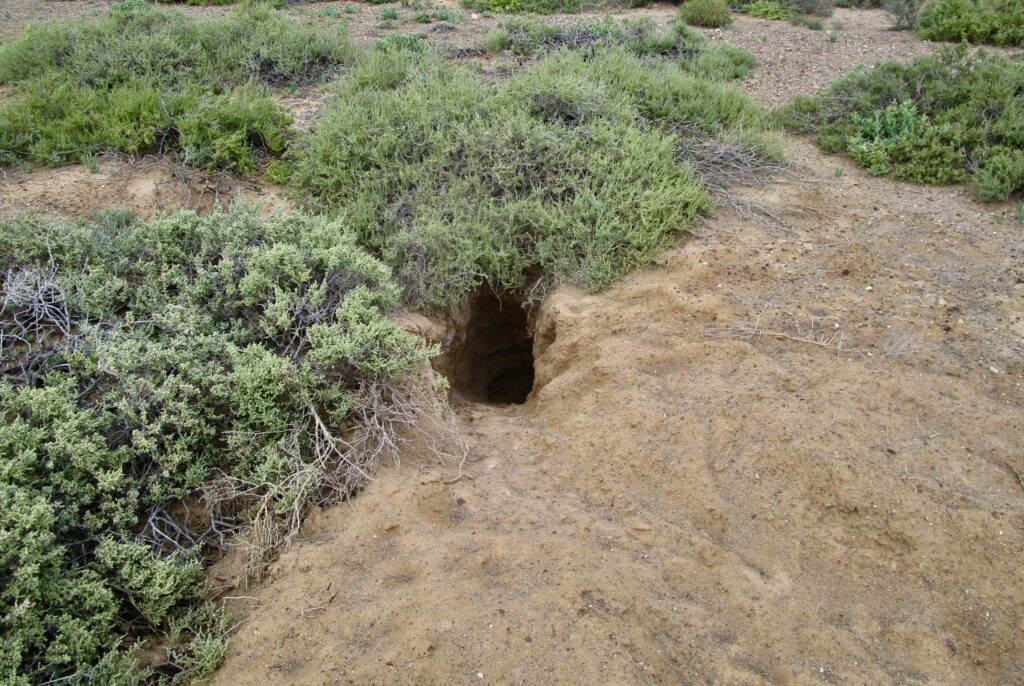
Honeybee colonies in more stable environments may persist for many years in hollow trees and cavities in rocks. On the Karoo plains there are no trees and rarely any rock cavities. Accommodation, in common with food supply, is ephemeral and honeybees need to be mobile and opportunistic. From the North African deserts comes the 2000 year old biblical tale of the bees that colonised a lion carcass¹. In the Karoo the deep dens and foraging excavations of aardvark offer a somewhat more hygienic place to build a nest – but underground accommodation is temporary and risky.
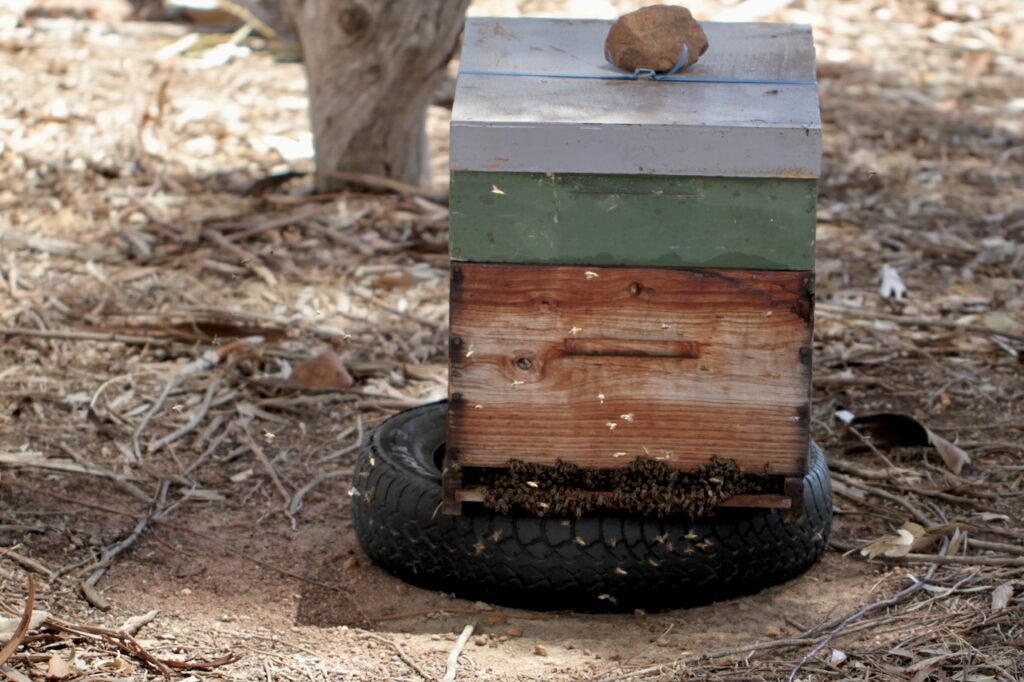
Apis mellifera capensis nest site on Wolwekraal Nature Reserve near Prince Albert in October 2023 after drought-breaking rains stimulated mass flowering.
Beneath the surface: termites, aardvark and honeybees
Aardvark feed on Harvester Termites which build their nests 1-2 m below the soil surface. The long-snouted aardvark digs down to the nest and uses its sticky tongue to extract its food. Aardvarks eat a portion of the termite workers at night but seldom if ever wipe out the colony. The termites immediately start to repair the damage by filling the aardvark foraging hole with soil and their droppings. Aardvarks also dig deeper, wider burrows or dens in patches of deep soil and use these as a daytime retreat where they sleep. After a few months they move on to find a new source of food, and the abandoned den is quickly occupied by porcupines, bat eared foxes, mongooses, meercats, shell duck or honeybees.
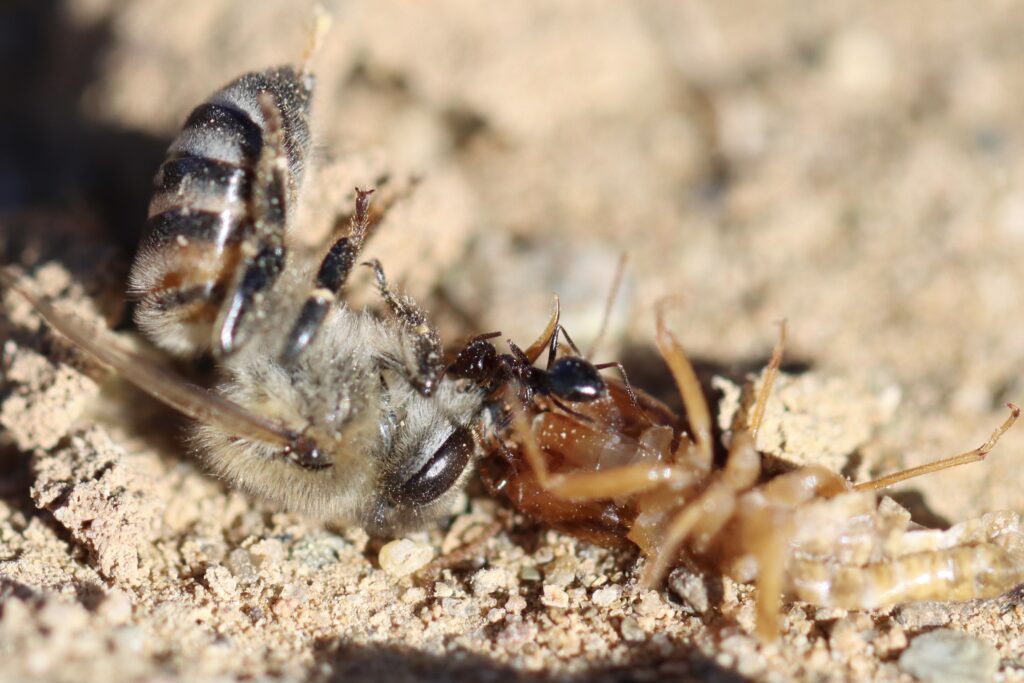
A honeybee dragging out a harvester termite with a dead honeybee attached to it.
Dead worker bee dropped outside the nest with a dead soldier termite that never lets go.
Dead honeybee and harvester termite with a curious ant.
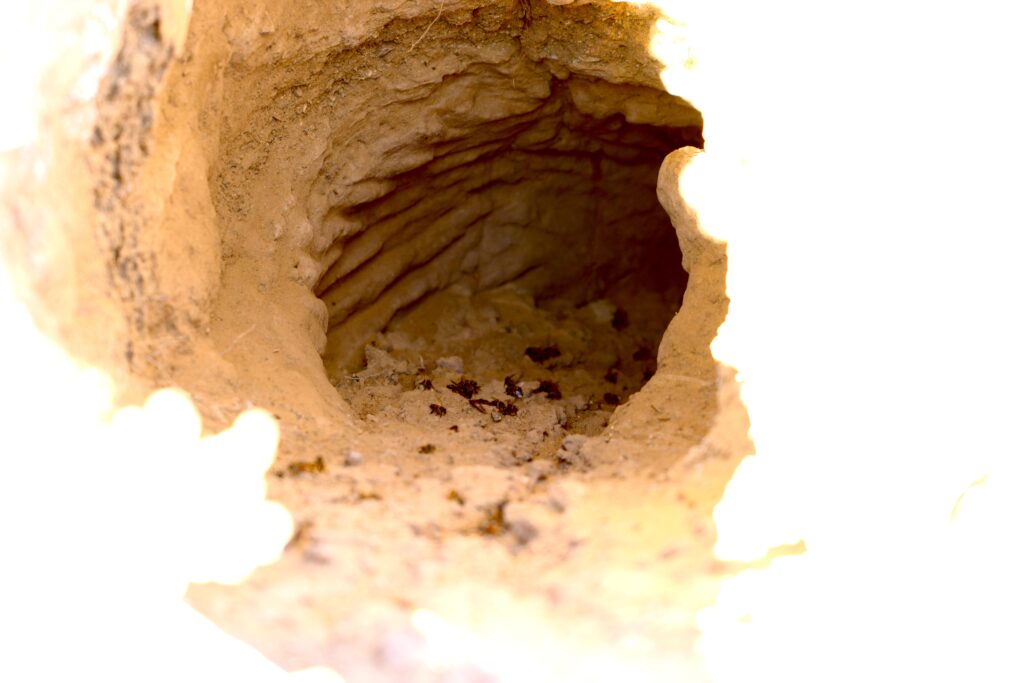
The downsides of making a nest below ground in a termite colony are threefold: flooding during heavy rain, attacks by the termites wishing to reclaim their territory, and unwanted interest from potential predators of termites, particularly Aardvark, Bat-eared Fox, Yellow Mongoose and Meercat. Dealing with these challenges is time consuming and costly for bees. After flooding, the workers clean the mud out of their nest by carrying mudballs out one by one and dumping them above ground. Bees injured or killed by soldier termites need to be carried out of the nest by fellow workers, and unwanted visitors such as mongooses chased away. All this defence and maintenance work reduces the workforce and eats into the time needed to gather the nectar and pollen resources needed to build combs and grow the swarm.
Dead honeybees and soldier termites in the aardvark burrow.
This is probably why the small dark Cape Honey bee (Apis mellifera capensis) with its multiple false-queens, small colonies and mobile lifestyle is much better at exploiting patchy and unpredictable food resources in the Karoo than the larger and more productive yellow race² (Apis mellifera scutellata) from the summer rainfall region of southern Africa.
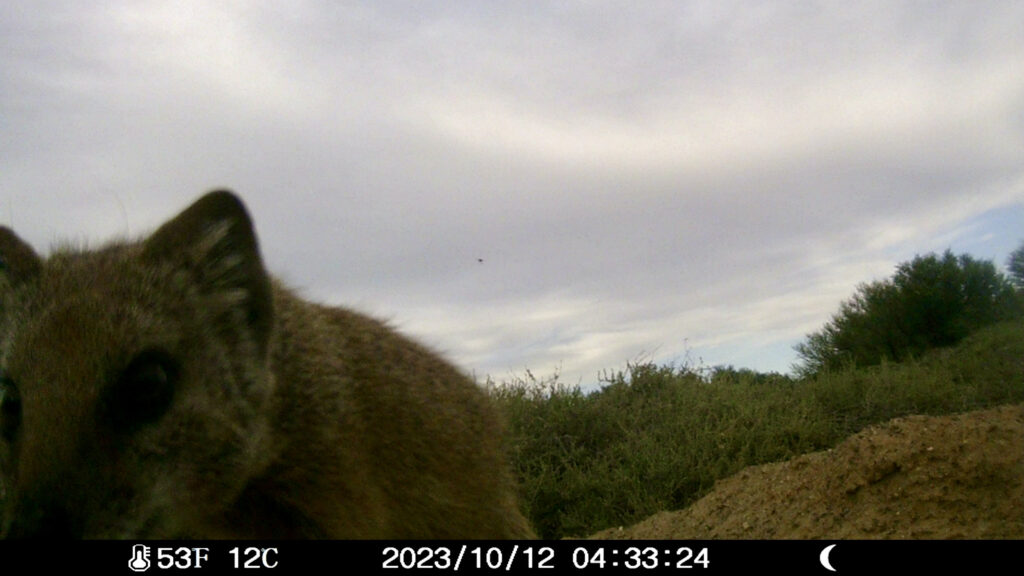
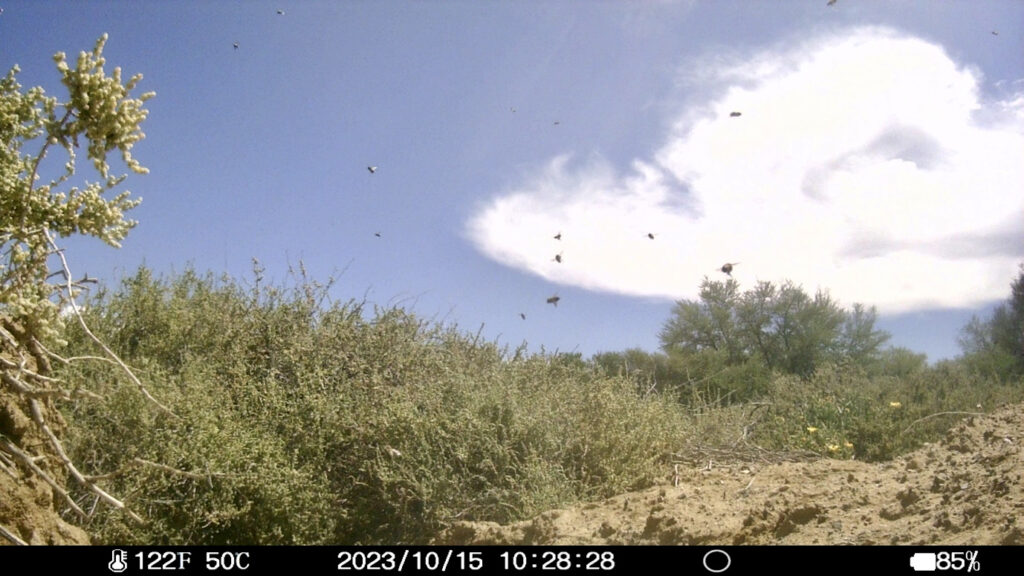
Camera trap footage from Wolwekraal Nature Reserve taken at the wild honeybee nest site:
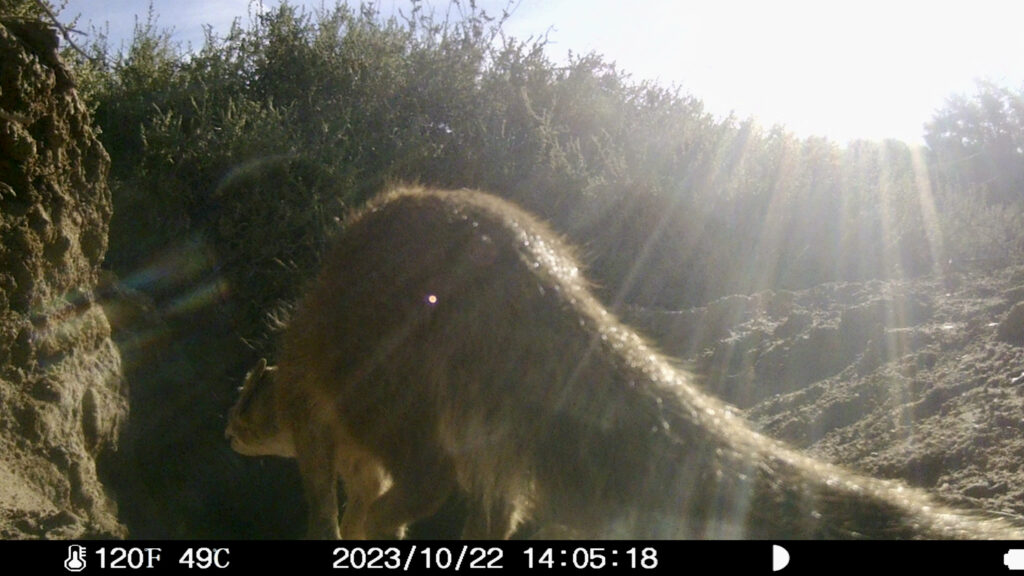
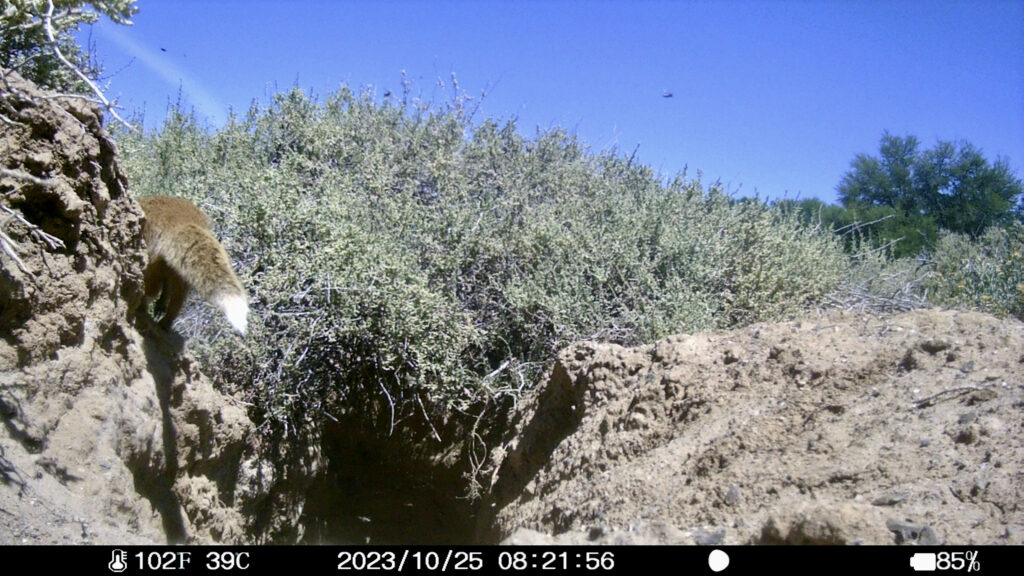
Yellow mongoose near bee nest at aardvark burrow.
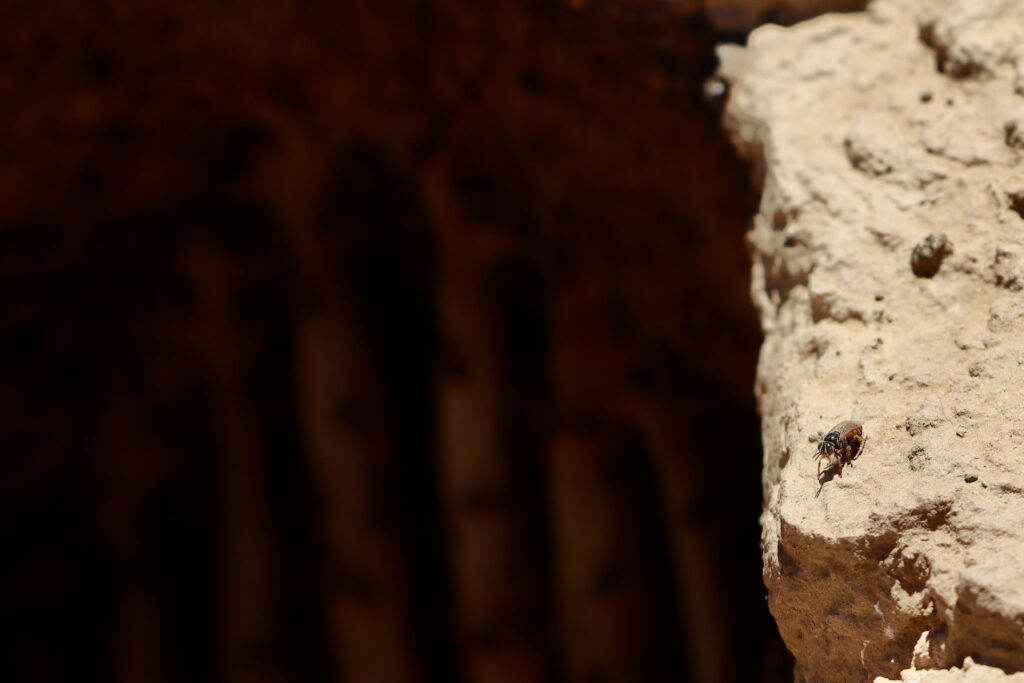
Bees emerging from the subterranean nest in an aardvark burrow.
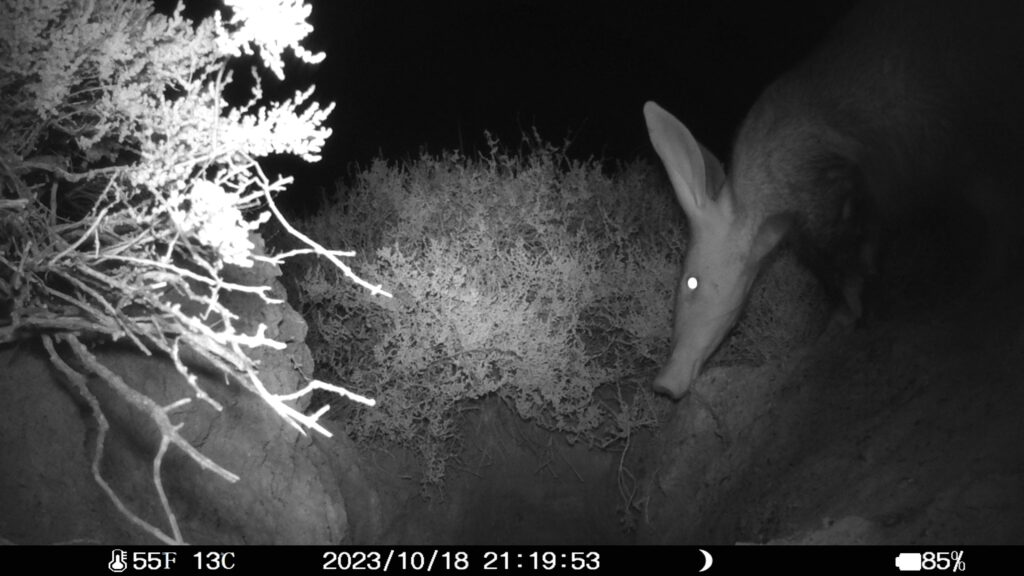
Aardvark looking into foraging hole occupied by bees.
Yellow mongoose at bee nest.
Yellow mongoose at bee nest.
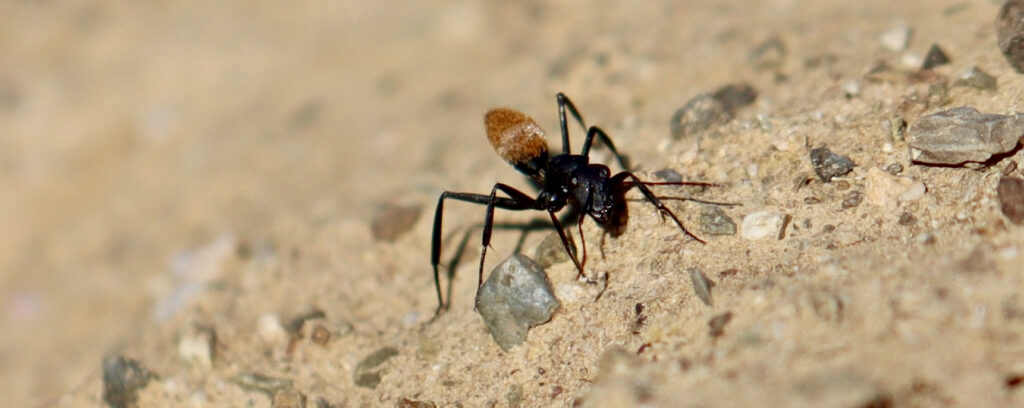
A nectar foraging ant at the nest site.
Footnotes
Lyle’s Golden Syrup tin boasted the now famous logo depicting Samson’s ‘lion and the bees’ (from the Old Testament, Judges 14:8). It was registered as Lyle’s trademark. Just as the bees produce honey inside the lion’s carcass, rich sweet syrup pours forth from the well-loved tin. Apparently the subject was raised at a beekeeper’s meeting in Pretoria – asking why this should be so? One farmer answered that when animals were slaughtered on the farm, honeybees would come and collect the moisture from the carcass (G. Tribe, personal communication, October 25, 2023).
They are the same species, but from different geographical races of that same species. There are many such geographical races throughout the distribution of Apis mellifera that naturally inhabits Africa, much of Europe, and some of the Middle East.
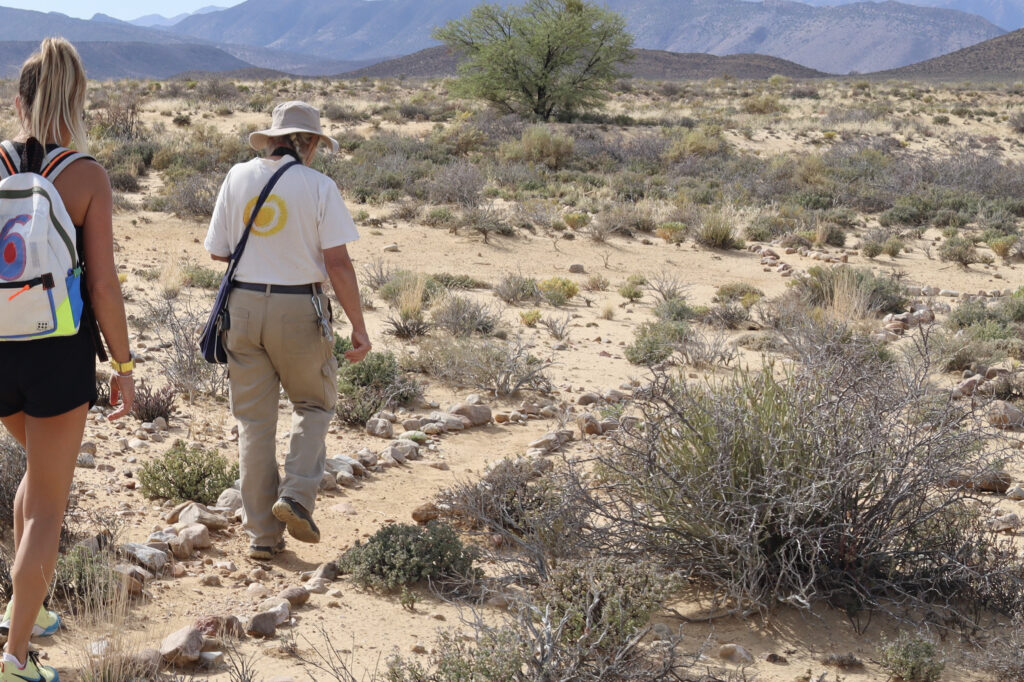
The author at work:
Dr Sue Milton-Dean has immense experience in plant ecology and veld restoration and dynamics. Sue offers spectacular and highly informative and interesting walks on the Wolwekraal Nature Reserve in Prince Albert. She takes one on a deep-dive into the ecology of the Karoo biome, looking also at its geology, botany, natural and cultural history. For more information visit her website at Wolwekraal Nature Reserve*.