Keep me free and I’ll keep you wild
Bees don’t need us to manage them—they need us to protect their wildness.
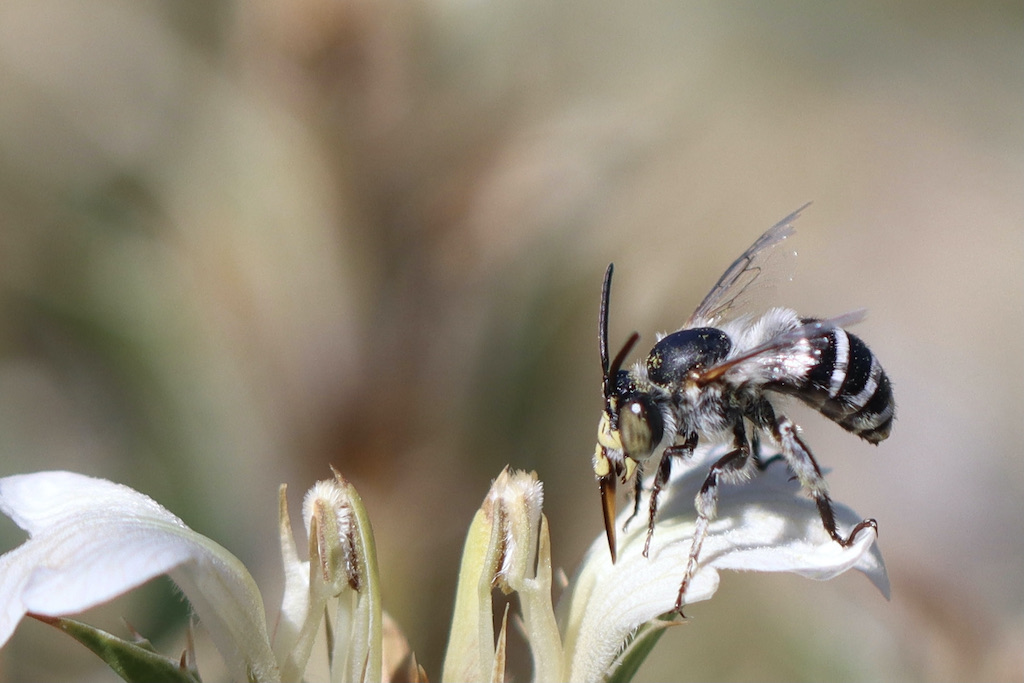
Wild honeybees and solitary bees are a crucial thread in our ecology. They have adapted and evolved over millions of years and are continuing to do so where they are still wild. Leave them to be wild—and not in hives—and keep tracts of nature and pristine environments where nature thrives, so that they can continue to be wild. healthy. free.
Where there are birds there often are bees
Wild Bees
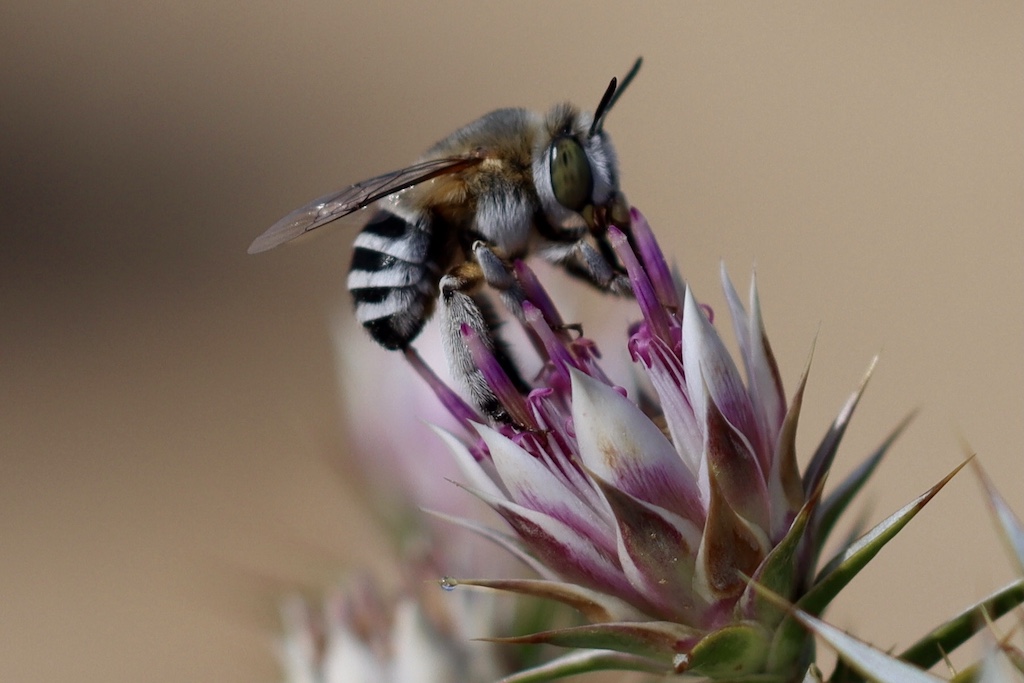
Bees play a pivotal role in biodiversity. In South Africa we have great diversity in the different types of bees
Who we are
Honeybees are cavity dwellers and the desert region is no exception. Join us on our field trips as we explore cavities of both honeybees and the numerous solitary bees
Featured article:
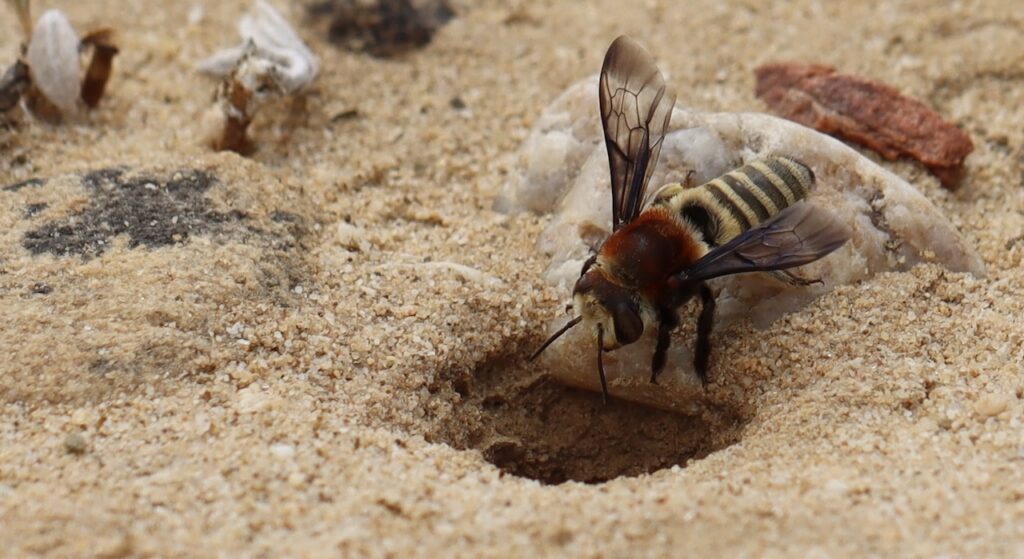
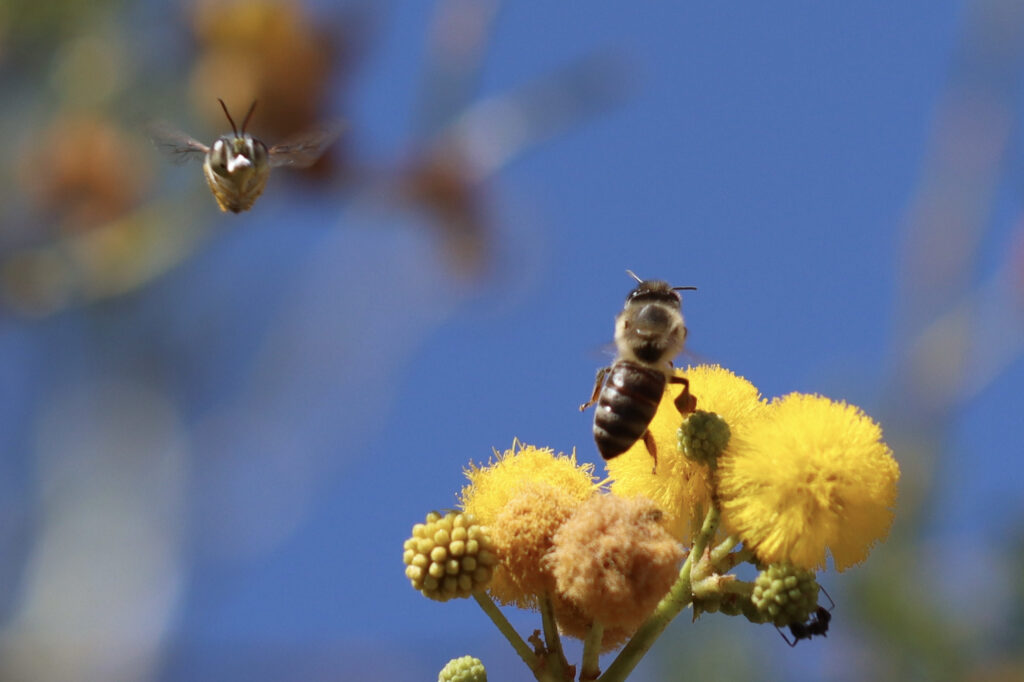
Perhaps a wild bee reserve does not require proclamation or signage. It exists wherever land is left intact and offers the resources bees need. And where bees are free to be wild. Read more here!
From the Blog
-
Notes from a Wild Bee Reserve: Megachile discolor
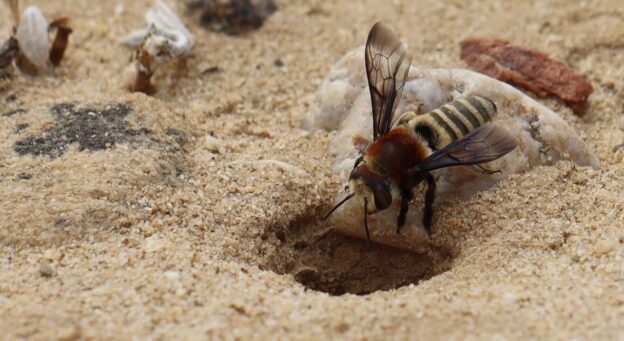
Perhaps a wild bee reserve does not require proclamation or signage. It exists wherever land is left intact and offers the resources bees need. And where bees are free to be wild.
-
Looking at a Desert Through the Lens of Bees: Diversity in Seemingly Sparse Environments

Viewed through the lens and biology of solitary bees, survival in the desert depends on being precisely in tune with the environment.
-
Bees of Bentiaba: From Ancient Seas to Desert Life in Angola

Standing among mosasaur fossils and two-billion-year-old rocks, I wondered what life this desert still held. I found the answer on two tiny patches of flowers: bees — more than I ever expected.
-
Life on the Edge. Ecological Dynamics of a Karoo Riverbank Nesting Aggregation.

Each spring, the riverbank comes alive with the buzz of a diversity of bees and their many associates.
-
Stone-Hard Nests in the Karoo: Observing Megachile taraxia

At first it looked like a splash of mud on a rock. The mud nests of Megachile taraxia remind us how much of nature’s genius is hidden in plain sight.
-
Keeping Bees Wild.

Rethinking bees, wildness, and what we’ve forgotten. Had anyone asked me 11 years ago about bees, I would have said: honeybees live in hives, they make honey, and they’re used for pollination. That, after all, is the dominant story. The cultural idea of bees as synonymous with hives and honey is deeply ingrained, shaped by…
-
Banded Bee Pirates: Honeybee Hunters with a Sweet Tooth
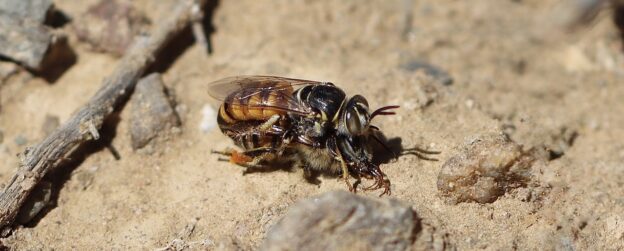
How These Predatory Wasps Use Honeybees to Fuel Their Survival and Reproduction.
-
Xylocopa io: The Rarely Seen Carpenter Bee
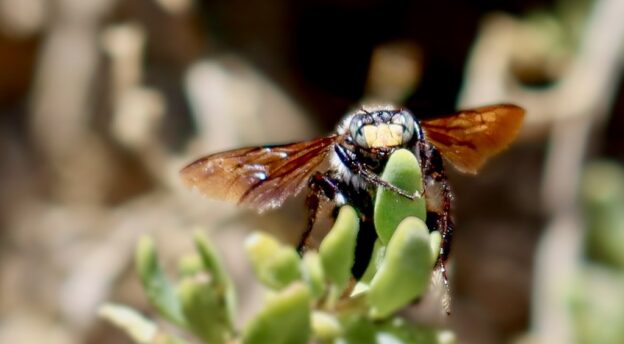
Some Xylocopa have interesting adaptations, like Xylocopa io with its elongated middle legs.
-
Far From Dead: The Surprising Biodiversity of Bare Ground
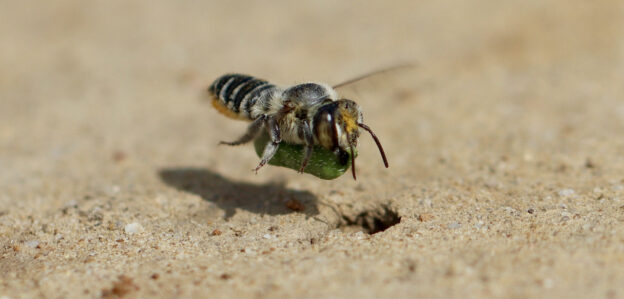
Occasionally, biodiversity might just be thriving beneath our feet.
-
The nest environment as more than just a dwelling for the honeybee
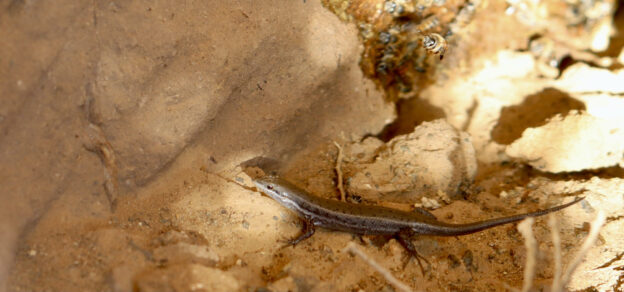
Burrowing mammals actively change their environment, and provide valuable microhabitats used by other species. These burrows offer other animals vital thermal refuges from temperature extremes and environmental fluctuations particularly in hot arid and semi-arid habitats.