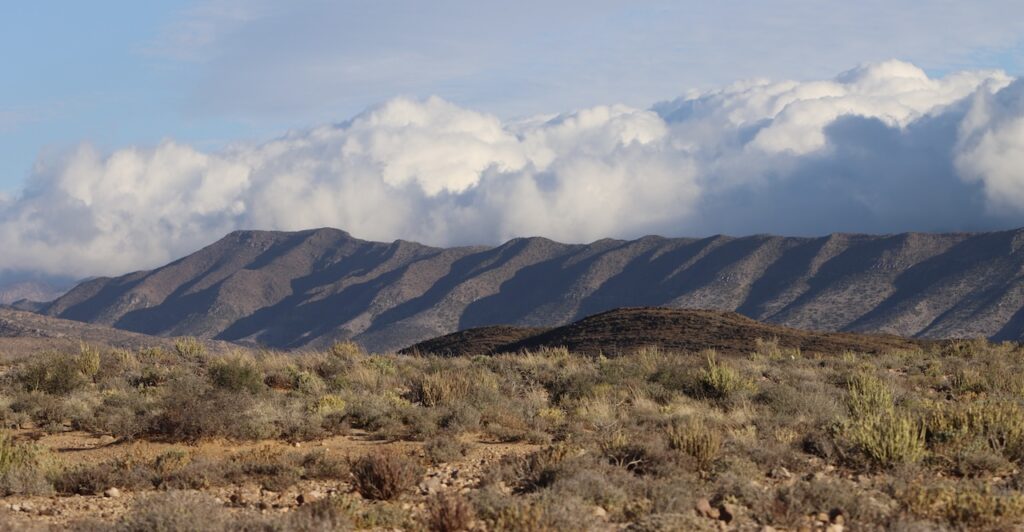
Perhaps a wild bee reserve does not require proclamation or signage. It exists wherever land is left intact and offers the resources bees need to live and nest freely, in open sand, hollow stems, river banks, or any other suitable site, where their life cycles unfold undisturbed. In this sense, any such place is quietly a wild bee reserve in its own right. Wolwekraal Nature Reserve is one such place, and it is here that I set out with Hinata early one January morning, as an introduction for her to discover more about the bees at Wolwekraal.
The mornings were already warm. Hinata, completing her internship at Wolwekraal as part of her third-year Nature Conservation course at the George Campus of NMMU, was focusing on the life history and threats to the Grey Tongue-leaf vygie, Glottiphyllum neilii, while also wanting to understand the insects visiting its flowers.
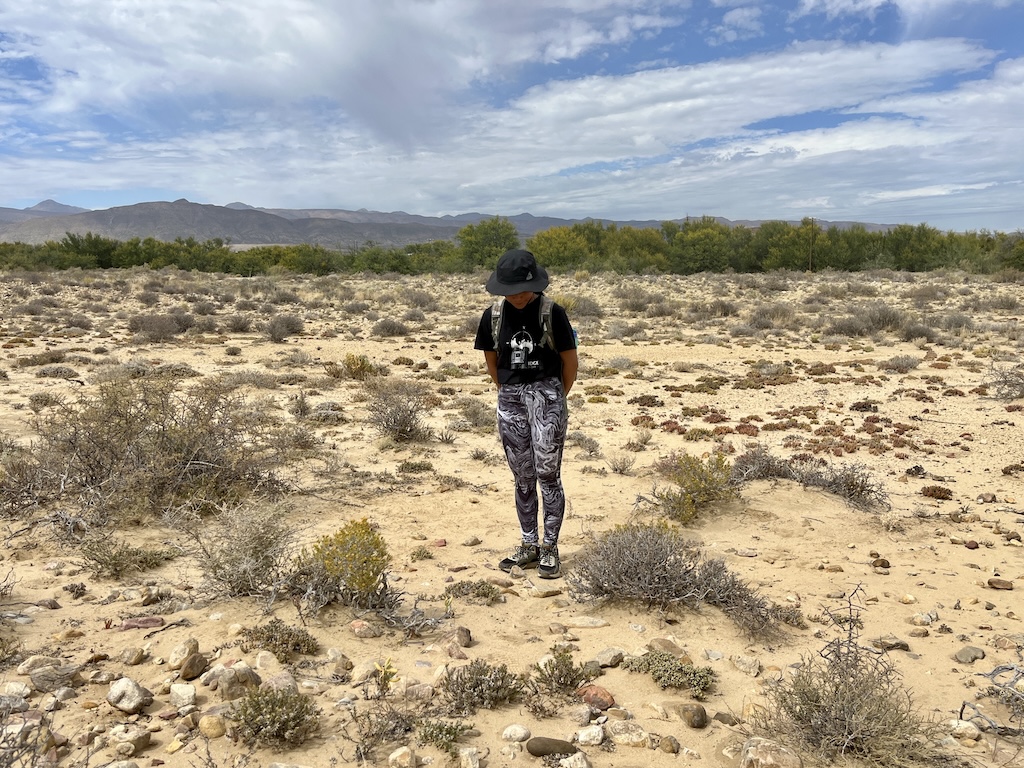
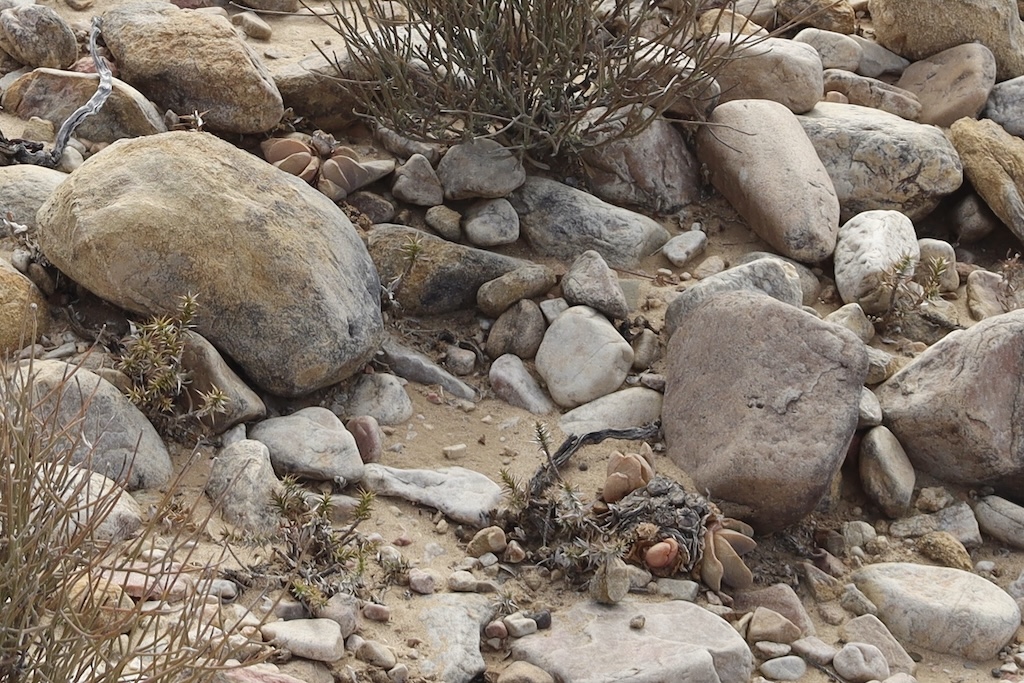
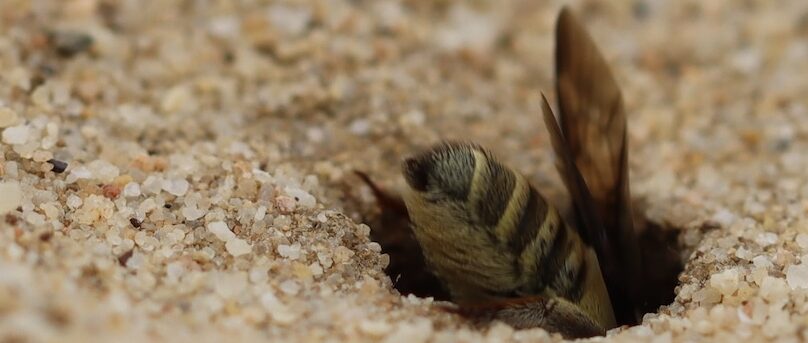
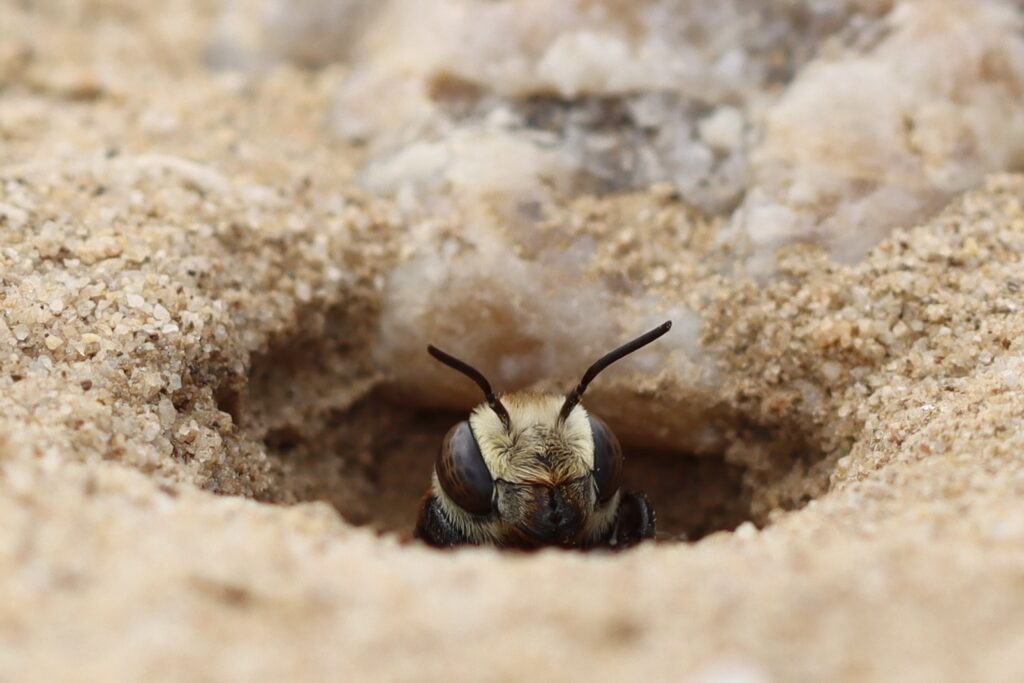
I knew of a small patch of Glottiphyllum, so we began there. As we examined the plants and discussed their ecology, we noticed a bee disappearing into a burrow in the ground. For Hinata this was a quick and deep dive into solitary bees.
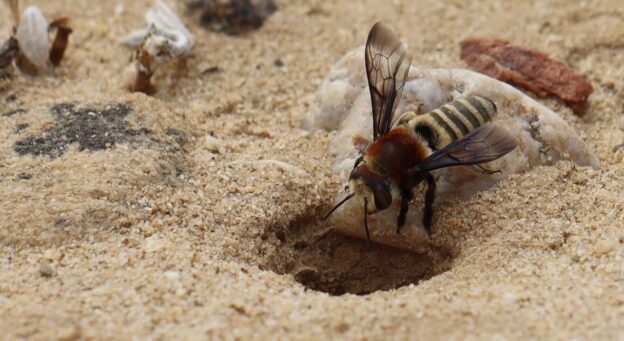
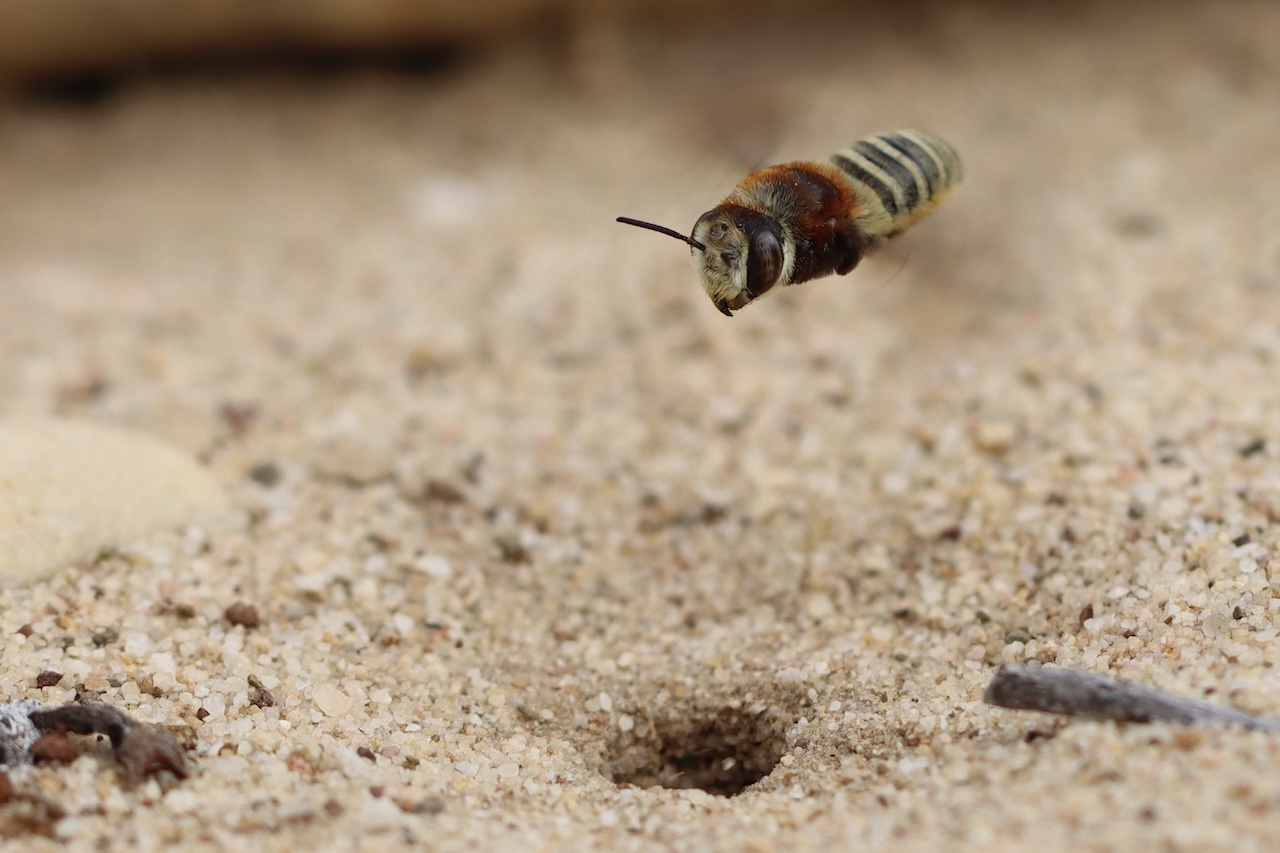
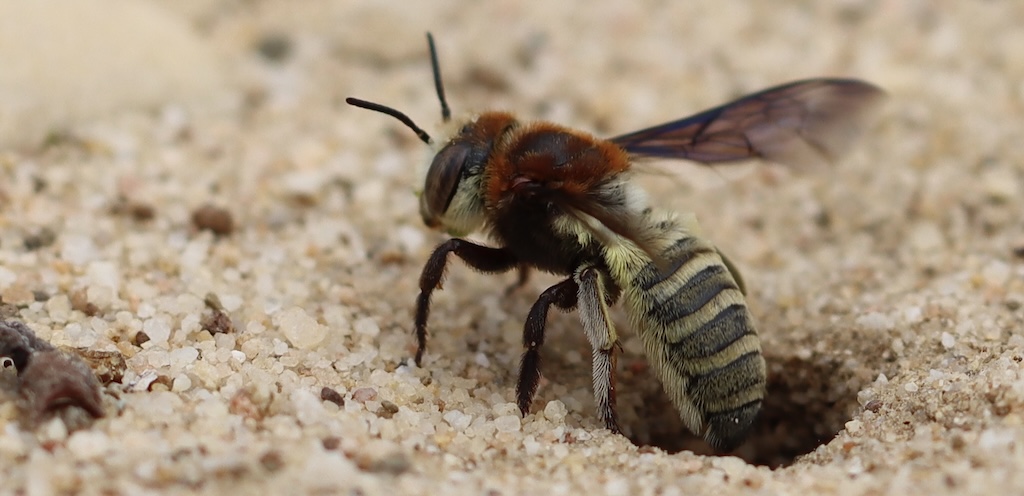
The bee was Megachile discolor Smith, a little-documented leafcutter bee in the family Megachilidae. Her ecology, and particularly her nesting behaviour, remain largely undescribed. The species name discolor, meaning two-toned, refers to the striking contrast in her body hair.
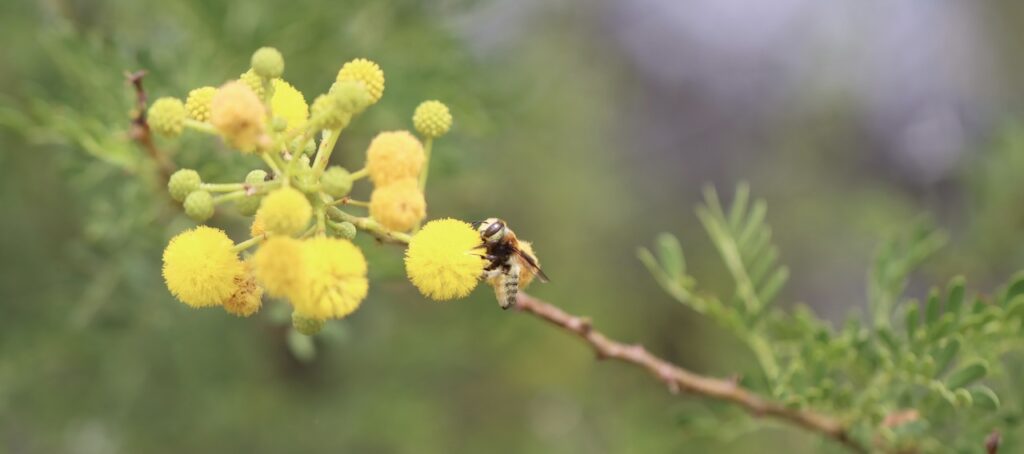
I have previously encountered her foraging on Vachellia karroo (sweet thorn) and on Gomphocarpus filiformis (lammerlat), suggesting she is a generalist. She is a strong, fast flyer and quickly lost to sight once airborne.
To my knowledge, there is no published information on her nesting behaviour, so what we documented may be significant.
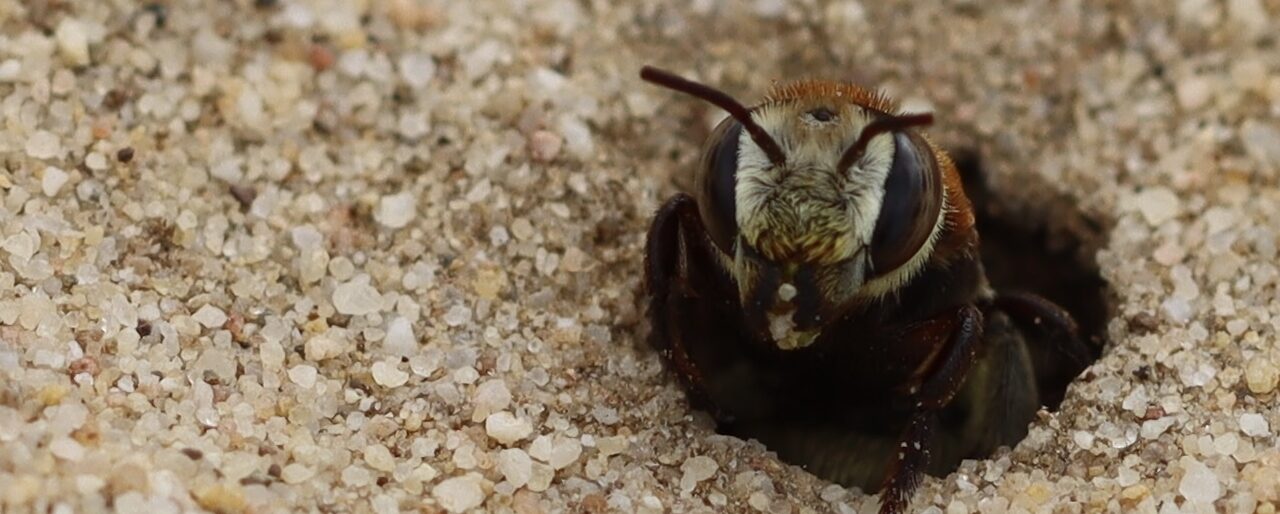
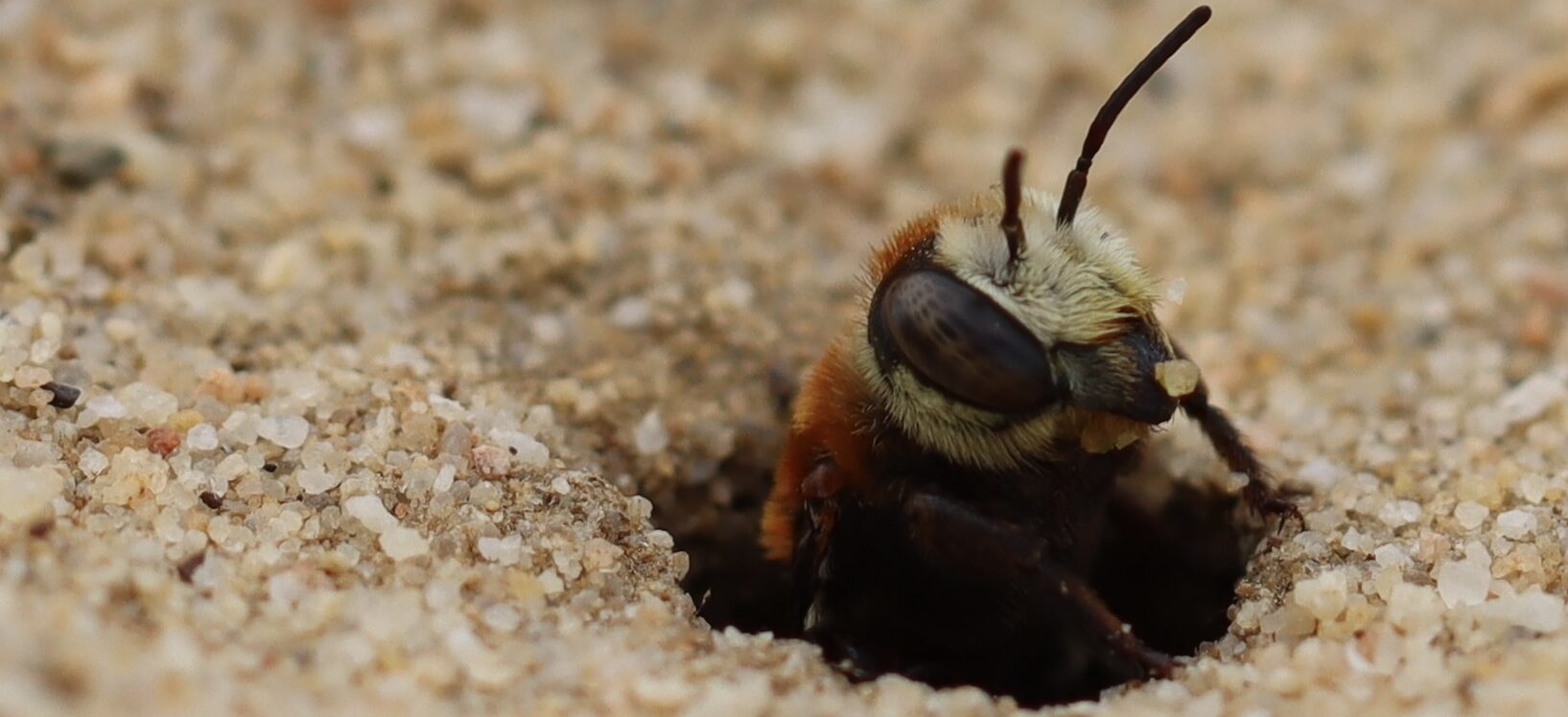
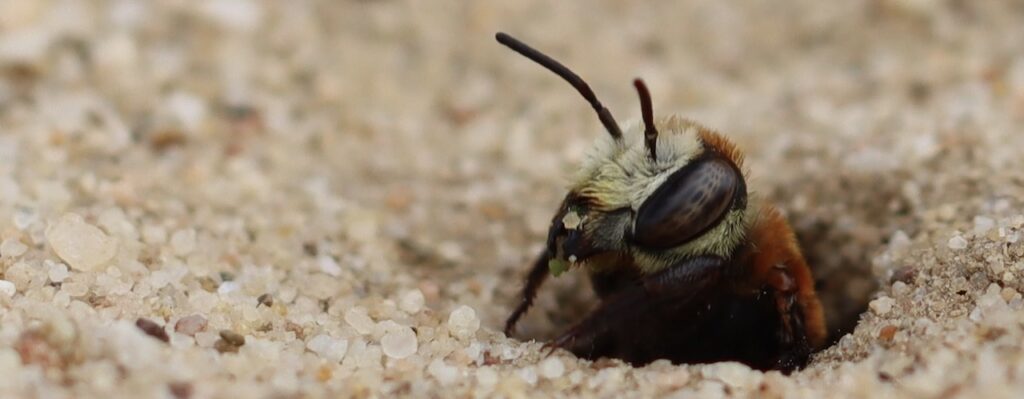
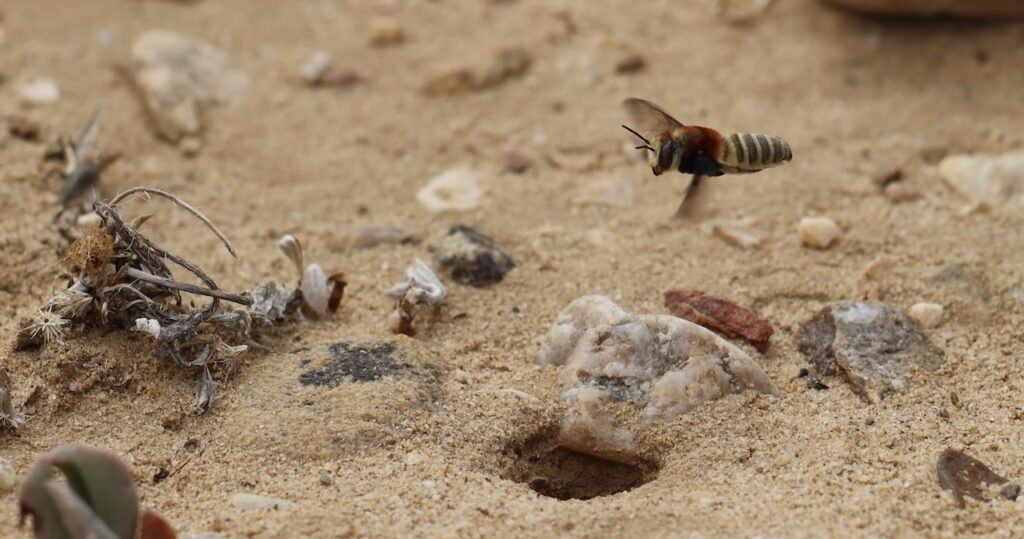
She nests in the ground in fine silty sand with a lichen crust. It remains unclear whether she excavates her own burrow or uses a pre-existing cavity, as we did not observe the initial digging. What we did see was her removing tiny sand granules and bits of plant material from the entrance before repeatedly returning with leaf pieces, most likely cut from nearby Vachellia karroo growing about forty metres away.
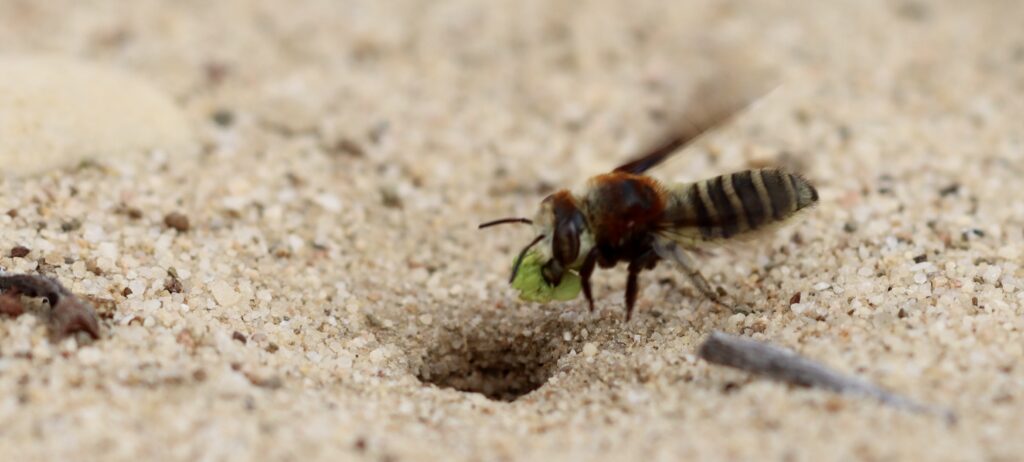
Having finished lining the nest cell, she began collecting pollen from the sweet thorn. By tracking her flight path, we located her high in the tree canopy.
Later that day in the early afternoon heat of 39°C, several males flew rapidly above the flowering trees. One rested briefly on a shaded branch, allowing a momentary binocular view of its robust form.
Over the following days I continued documenting M. discolor and found her provisioning a second nest about five metres from the first. In the same area were two smaller entrances belonging to a different Megachile species.
Very little is known about the ecologies of most indigenous solitary bees in arid regions. Many species have been described taxonomically, yet knowledge of their behaviour and life histories often ends there. It feels increasingly important to record not only which species are present, but when they are active, how they nest, and which plants they depend on, thereby establishing baseline data. One cannot measure change without first knowing what is normal.
Wolwekraal Nature Reserve, with nearly fifty solitary bee species recorded in just over one square kilometre, and over a two-year period, is a remarkable example of such a place. Here these species, together with wild honeybees nesting in abandoned aardvark burrows, live freely, undisturbed by human intervention. In protecting the land, the reserve allows a wild bee reserve to exist without proclamation. Through documenting these species, we begin to establish a baseline, and in doing so, make it possible to recognise change.