Author Archives: Karin Sternberg

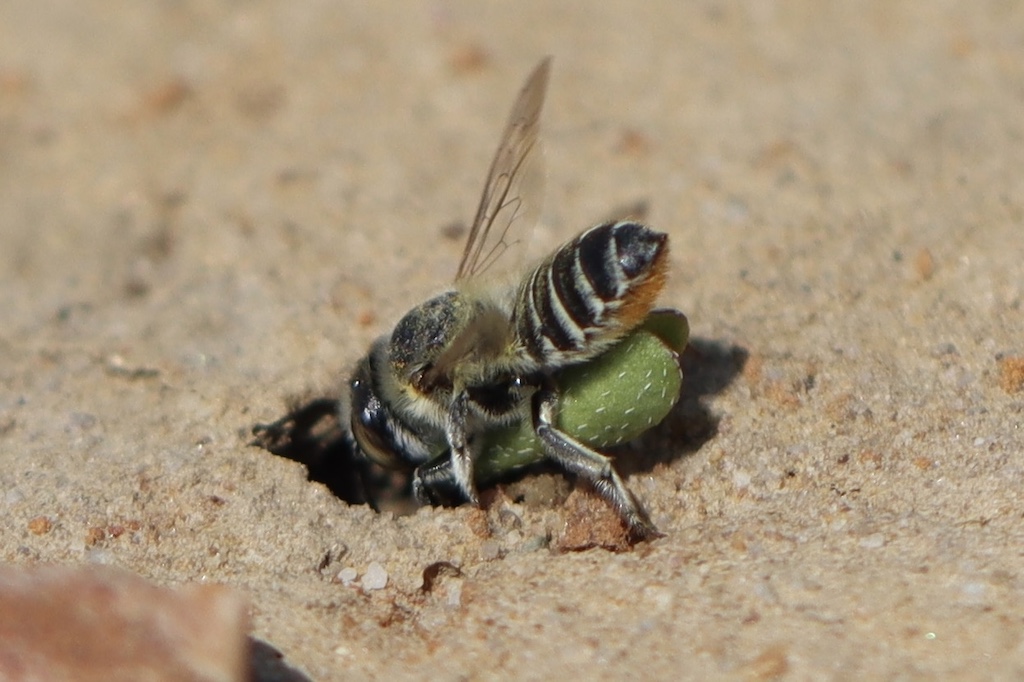
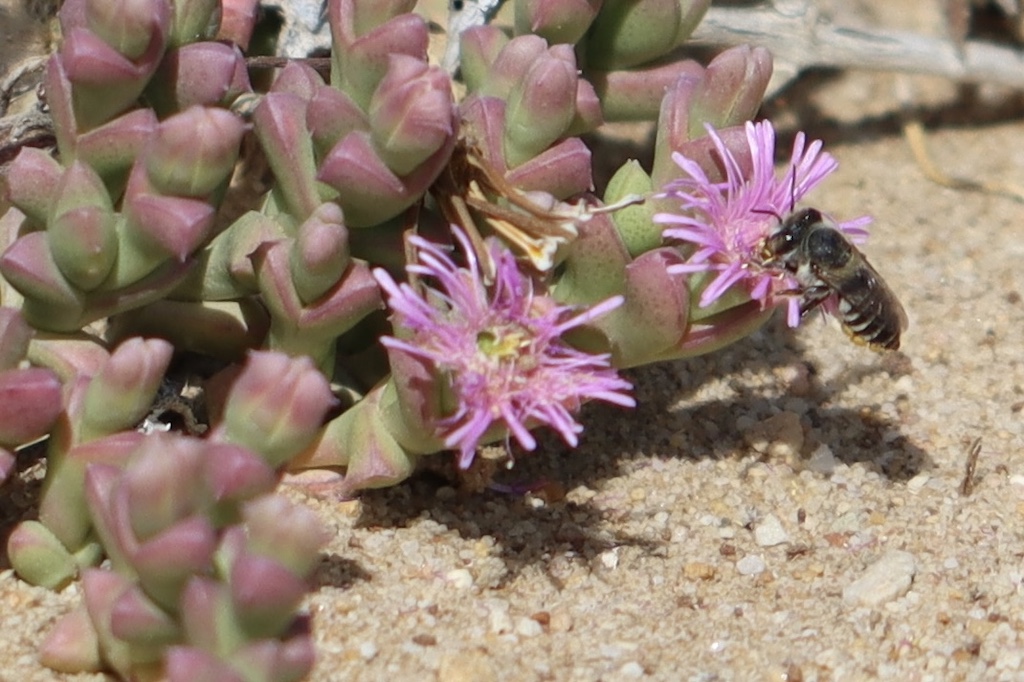
Leaf cutter bee on deflation hollow

About Bees, Naturally.

Should we keep bees?

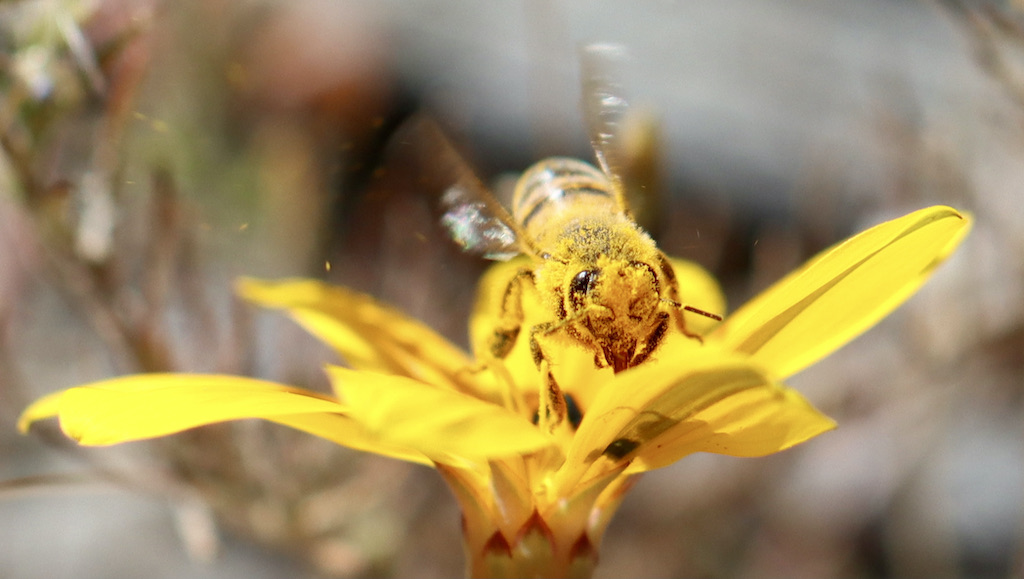
Arid to semi-arid environments are surprisingly rich in bee diversity. When most people think of bees, they often picture the honeybee (Apis mellifera). However, the reality is far more complex. Globally, there are over 23,000 bee species, the majority of which are solitary rather than social, as seen in honeybee colonies. In these solitary species, each female constructs her own nest, gathers pollen and nectar to provision her young, and lays her eggs before her brief life of sometimes just 6 to 8 weeks comes to an end. Each season often hosts its own unique bee species. This contrasts with honeybees, which remain active throughout the year in most regions of South Africa. Many of the solitary bees have co-evolved together with the flora of each region. This intricate tapestry of adaptation and survival has unfolded over millennia, leading to a remarkable diversity that thrives even in the harsh climates of areas like the Karoo. It’s astonishing to think that such diversity exists in seemingly desolate landscapes. 

As I observe the bees at Wolwekraal Nature Reserve in the arid Karoo, I often feel a sense of urgency; there simply aren’t enough hours in the day to document the incredible ecology and behaviour of solitary bees currently emerging with the spring flowers. In SA we have over 1300 species of solitary bees, but many remain to be both discovered and described. So little is known about them. 

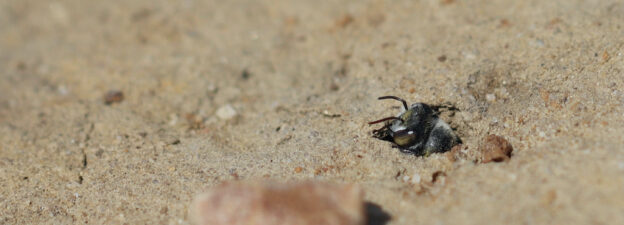
Wolwekraal is a paradise for bees, but bees don’t thrive in isolation. Their presence also transforms Wolwekraal into a haven for all life that relies on them. As examples of what exists, for the past three weeks I have been engrossed in a bare patch of hardened ground surrounded by vygies, daisies, and other typical Karoo flora. Currently annuals like Gazania lichtensteinii are flowering in swathes of yellow. At first glance this sandy deflation hollow appears desolate. But I have been incredulous at the life on it! It is home to a nest aggregation of solitary bees. I counted 114 nests in just twelve square metres. The males hatch first, engaging in frantic competition to mate with the newly emerging females. Once mated, she flies off in search of a new nest site and begins her foraging for pollen and nectar to start reproducing and to ensure the survival of future generations. 
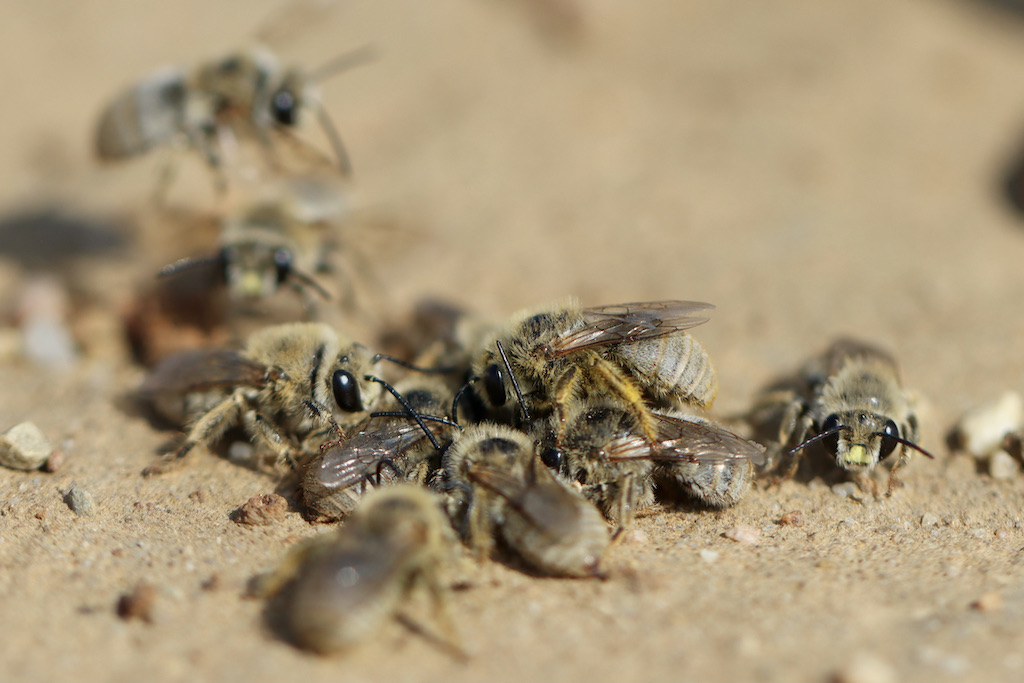
The abandoned nests are then repurposed by other solitary bees, such as those in the Osmiine tribe, which includes leaf-cutting, mason, and resin bees. These female bees utilise diverse nesting techniques, often lining their burrows with remarkable reddish-pink pulp made from chewed plant material. Others use leaves and petals to construct thimble-like chambers. After foraging for nectar and pollen on flowers close by, each burrow is meticulously sealed with a mixture of sand, tiny stones or leaves, and a secretion from a special gland. Some even place stones on top for additional protection. Once her work is complete, the female dies, leaving her young to develop underground until they hatch in a year, if conditions are right. 
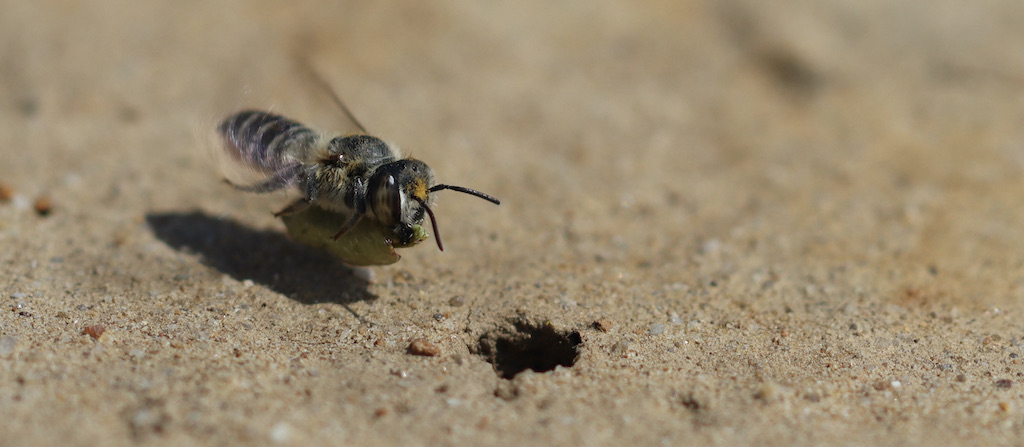
Leaf cutter bee returning with leaf material to her nest in the ground

However, the nests are not always safe from other threats. Wingless velvet ants (a kind of wasp) are able to push out the stones and lay eggs within. Moreover, bee-flies can parasitise open nests, further complicating the lives of solitary bees. Amidst this all, balbyter ants carry off any organic debris, frantic surface beetles and sand lizards scurry by, grasshoppers leap across the terrain, and robber flies, birds and barking geckos are all in the neighbourhood.

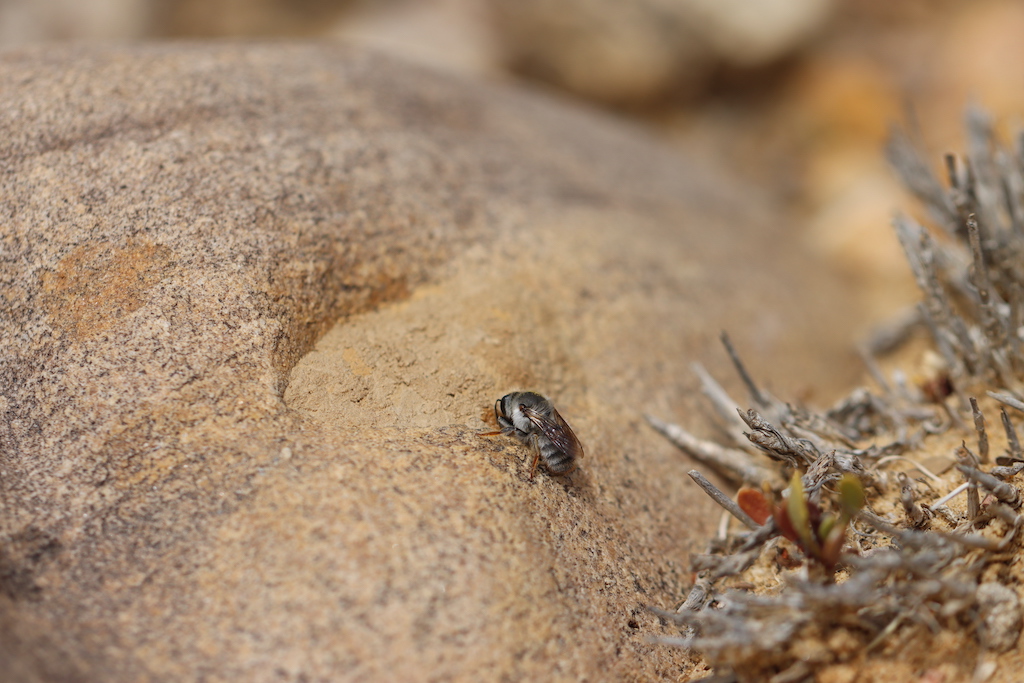
Beyond this deflation hollow, I discovered an extraordinary mud nest in the shallow of a stone. A bee known as Chalicodoma builds her nest in a hollow in a rock sealed over by sand cemented with a secretion from her mouth. And just a short distance away, along the ancient riverbank of the Dorps, exists another active bee nesting site with a multitude of bee nests; here root and burrow fossils create extraordinary patterns between nest entrance holes. This is merely a glimpse into the myriad stories waiting to be uncovered at Wolwekraal.
Many aspects in nature remain undocumented. For example, the fly I filmed parasitising the solitary bee nests may represent a new host record. Some solitary bee species are highly specialised, acting as the sole pollinators for specific flower species. This fragile interplay highlights the delicate nature of plant-pollinator relationships. Our landscapes are vastly under-documented, and with many species facing extinction due to habitat loss and human encroachment, we must act quickly to better understand and protect these vital ecosystems.

Wild honeybees are equally fascinating, and again so little is known about them. In most places honeybees have become a commodity and are typically associated with hives (and honey), and traded as pollination units. In South Africa, fortunately, more than 90% of honeybee colonies remain wild residing in natural habitats. Contrary to common belief, we have no shortage of bees. This natural abundance fosters adaptation in micro-habitats, and to changing environments and climates. In both our solitary bees and wild honeybees, SA has a huge natural pool of excellent pollinators. In Europe, most wild honeybee populations have been lost, with the majority of western European nations seeing almost total domestication and hybridisation of their once indigenous honeybee species. As a result, many colonies succumb annually to disease and other stressors. In contrast, wild honeybees in their natural cavities create habitats conducive to survival. Their use of abundant, local, site-specific plant resins, mostly in the form of propolis, and their interactions with many other creatures, organisms and microbes within the nest, is what keeps their environment healthy. 
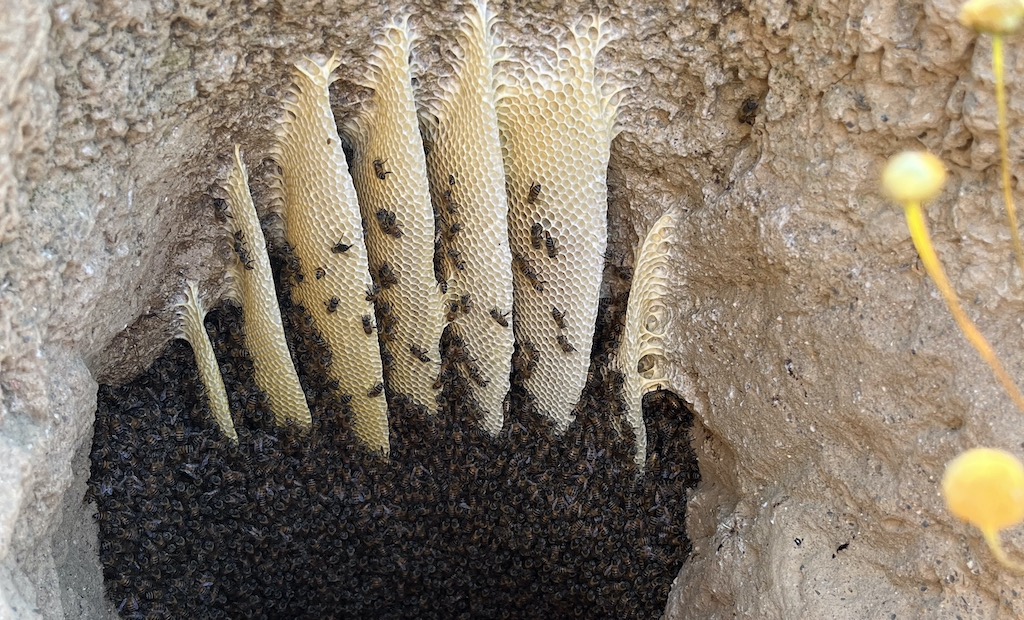
Human activity can disrupt this delicate balance. Introducing hives to a new area can drastically alter the local ecosystem. A single hive can house up to 60,000 bees, all of which require substantial amounts of forage to thrive. The ecological consequences can be severe, especially when unaware of the existing species. Besides the risk of disease and microbial shifts, and the introduction of different strains of honeybees into an area, honeybees can outcompete solitary bees for nectar and pollen, further stressing already vulnerable populations. Wild honeybees living naturally in an area are equally affected by such increases in honeybee numbers. During periods of extreme heat or drought, wild honeybees can enter a state of dormancy, relying on stored honey to survive. It’s been suggested that the number of wild honeybee colonies in an area is limited by the worst month for forage availability. 

Nature possesses a remarkable intelligence and a fragile balance that we must strive to protect. We should be cautious not to unintentionally contribute to ecological loss through changes like hive introductions in finely tuned environments. Instead, by planting indigenous flowers and veld types and allowing some areas of our gardens to remain wild, we can invite nature in and help create vibrant ecosystems. Just as Wolwekraal serves as a unique ‘laboratory’ for observing nature, our gardens can also become spaces for wild bees and other creatures, revealing the wonders of biodiversity season after season, and allowing us all to become bee-keepers of a different kind. Who knows what bees we may yet discover. 

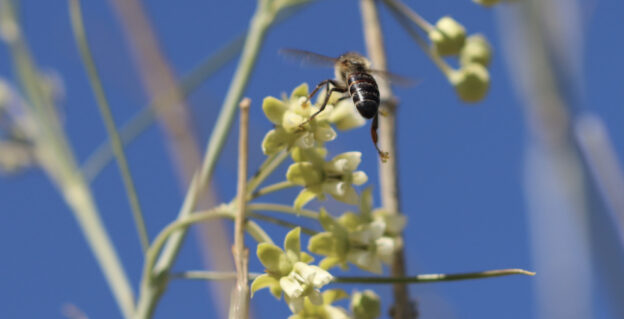
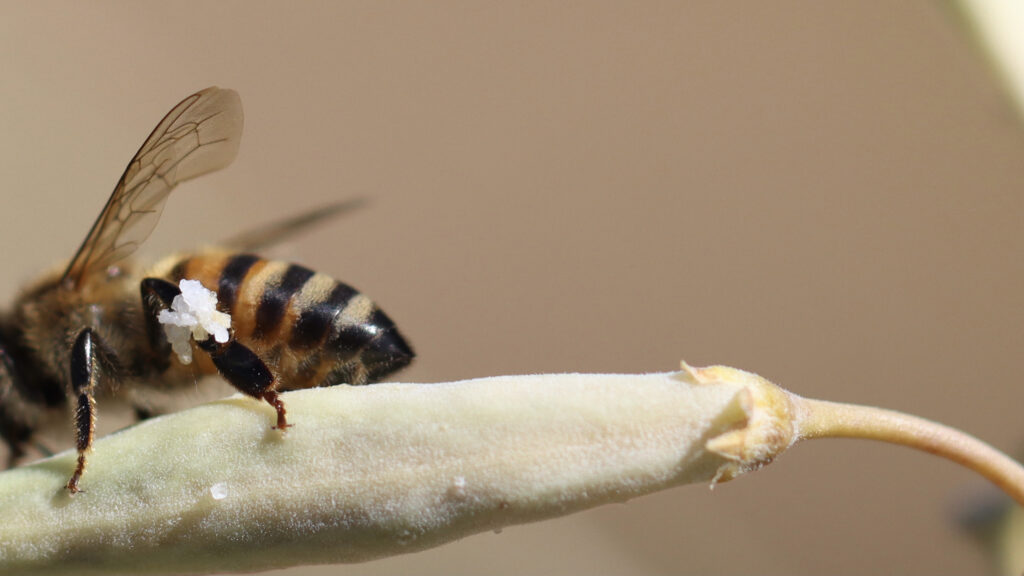
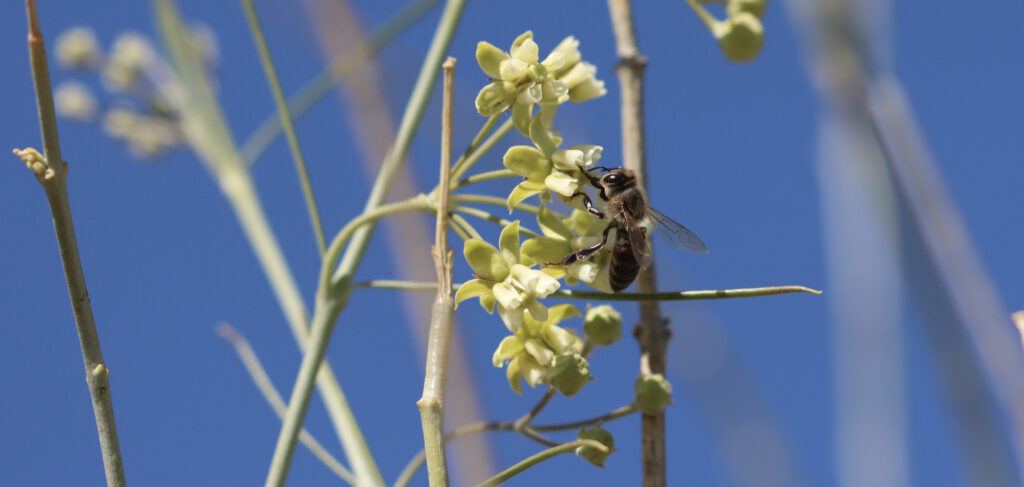
Honeybee collecting nectar from a milkweed plant in South Africa

Honeybees and Gomphocarpus filiformis (lammerlat): A source of propolis in the Great Karoo

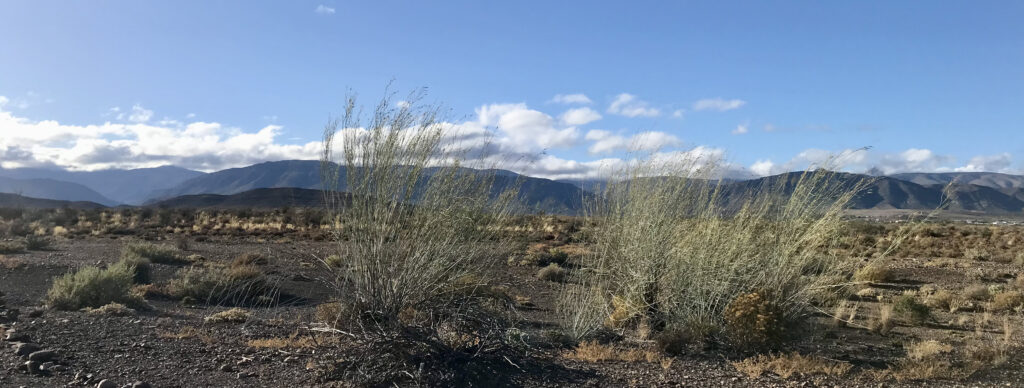
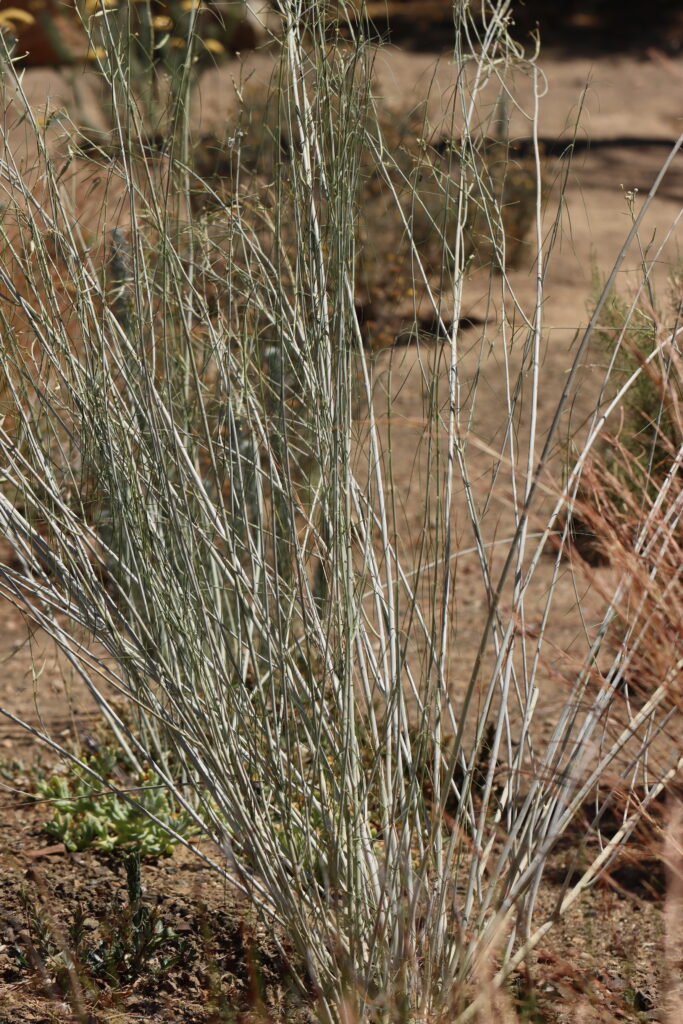
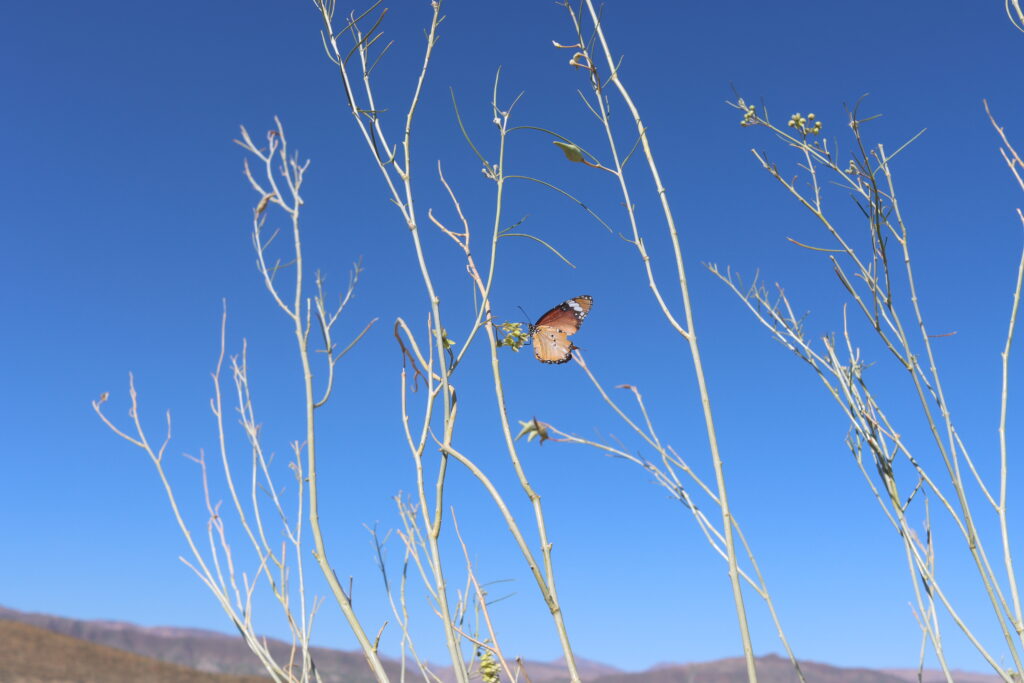
Karoo landscape with Lammerlat (Gomphocarpus filiformis)

Wild honeybees and propolis

The wild honeybees of Southern Africa are renowned for their propensity in the use of propolis which enhances their survival in the wild. The vast amount of propolis collected and deposited in and around a wild colony attests to its value to the honeybees. But where do the bees collect the waxes, resins and plant exudates that form the basis of propolis, and in such large amounts? Individual honeybees are occasionally seen scraping waxes from buds of Protea species or resin oozing from a wound on the trunks of Vachellia karroo, but most sources of propolis are largely unknown. Although the topography and hence plant species composition may vary greatly between regions, the honeybees appear to have little difficulty in locating a source.

Recorded here is an observation of honeybees collecting the exudate from an oviposition puncture caused by a tephritid fruitfly whose larvae feed on the seeds of a plant widespread in the Karoo.

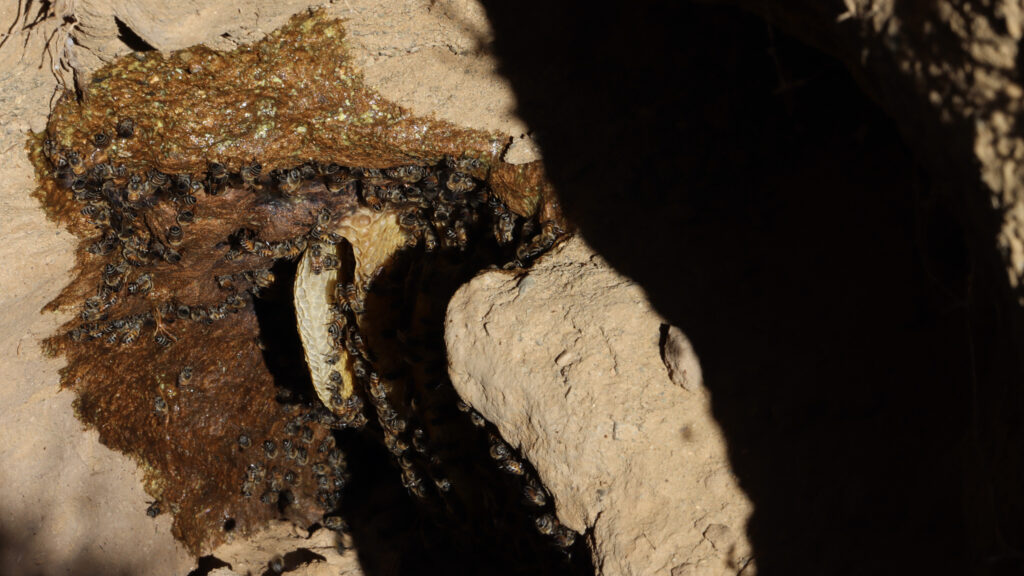
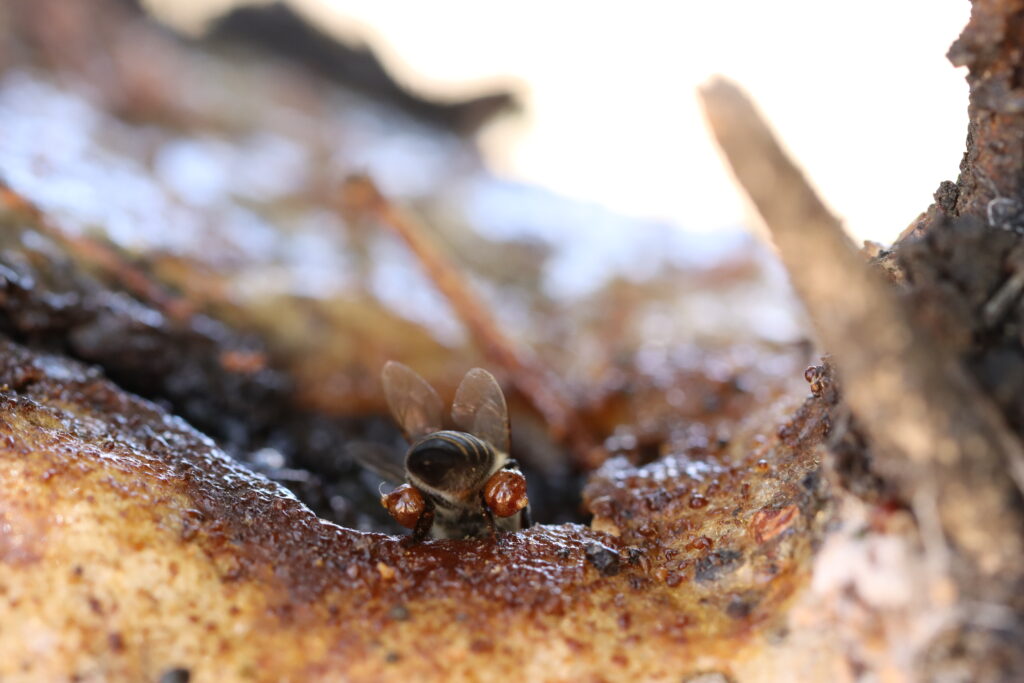
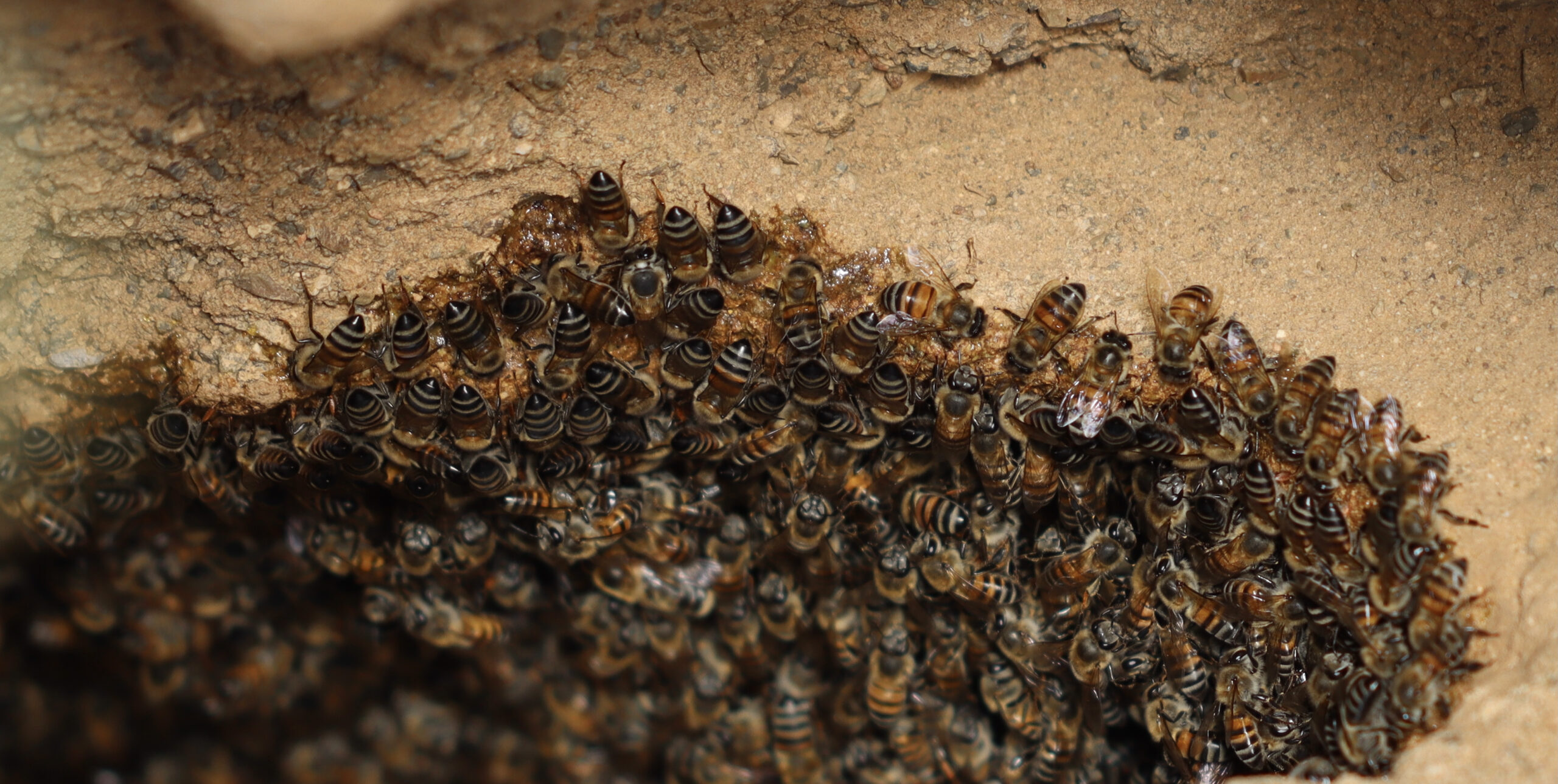
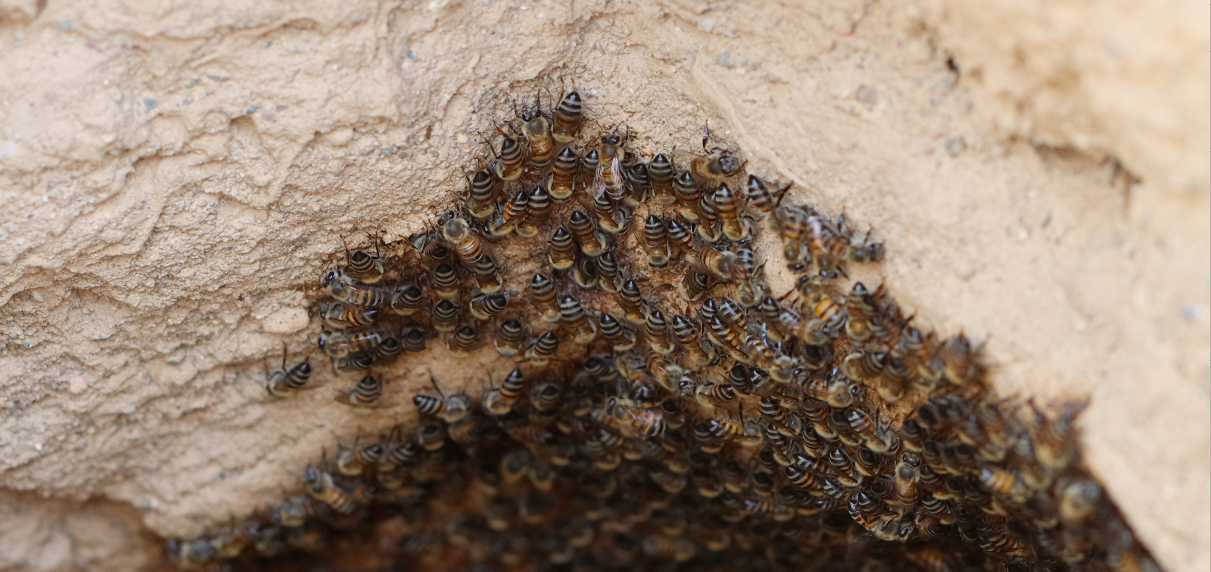
Extensive use of propolis in a wild honeybee nest
The extensive use of propolis in a wild honeybee nest.

Lammerlat (Gomphocarpus filiformis)

Gomphocarpus filiformis, a plant commonly known as lammerlat (an Afrikaans word, lammer = lambs, lat = stick, often used as a stick to chivy lambs when herding), is widespread across Namibia and the western arid interior of South Africa primarily in Desert, Nama-Karoo and Succulent Karoo habitats. Honeybees were first documented on lammerlat early in December 2023 at KRAAL, a garden in the Prince Albert municipality, where they were collecting resins on horn-like seed pods. The horns indicate that it belongs to the Asclepiadaceae into which family the stapeliads are prominent. There is a fruitfly species which lays its eggs in the stapelia pods where the fly larvae consume the seeds as they develop. A limited survey showed that 98% of the seeds on several Hoodia gordonii plants were entirely consumed (G. Tribe, unpub.). Was this happening on the horn-like seed pods of lammerlat?

Gomphocarpus filiformis (lammerlat), is found primarily in arid habitats.
A honeybee collecting resins on a seedpod of Gomphocarpus filiformis (lammerlat).

Adaptive significance of plant resins and cardiac glycosides in defense and medicinal contexts

Resins are a defensive mechanism of plants and have a physical function (expelling an organism or encasing it) and a chemical antibiotic function (especially for fungi but also insects). For especially mammalian predators, there are heart poisons called cardiac glycosides (also in Erythrina seeds), hydrogen cyanide, etc. Yet porcupines feed without consequence on a wide variety of poisonous bulbs that are deadly to other animals. Nomadic peoples eat locusts or saturniid caterpillars by first removing the guts for they may contain poisonous plant material. Fireflies make cardiac glycosides and they have evolved warning colouration. Toads also possess such compounds. In very small doses these cardiac glycosides may stimulate the heart and are thus used in the treatment of congestive heart failure and arrhythmia, but at higher doses can cause havoc and death.

When injured, lammerlat oozes a milky sap-like resin, a latex, as a defensive response against pathogens. This sap contains cardiac glycosides that are likewise toxic to herbivorous animals. But some insects, like the monarch butterfly and locusts, incorporate it as a defence mechanism and thus become toxic to their predators (S. Milton-Dean, pers. com., Dec. 2023). Thus a defence strategy evolved by a plant to avoid being eaten can be co-opted by another organism so that it too can avoid being eaten. Most early medicines used by humans involved the same principle in plant-based medication when taken at the correct dosage rate.

Honeybee collecting milkweed resins.
When injured, lammerlat oozes a milky sap-like resin. Here a honeybee is collecting the resins.

Defensive resin response of Lammerlat seed pods to Tephritid flies

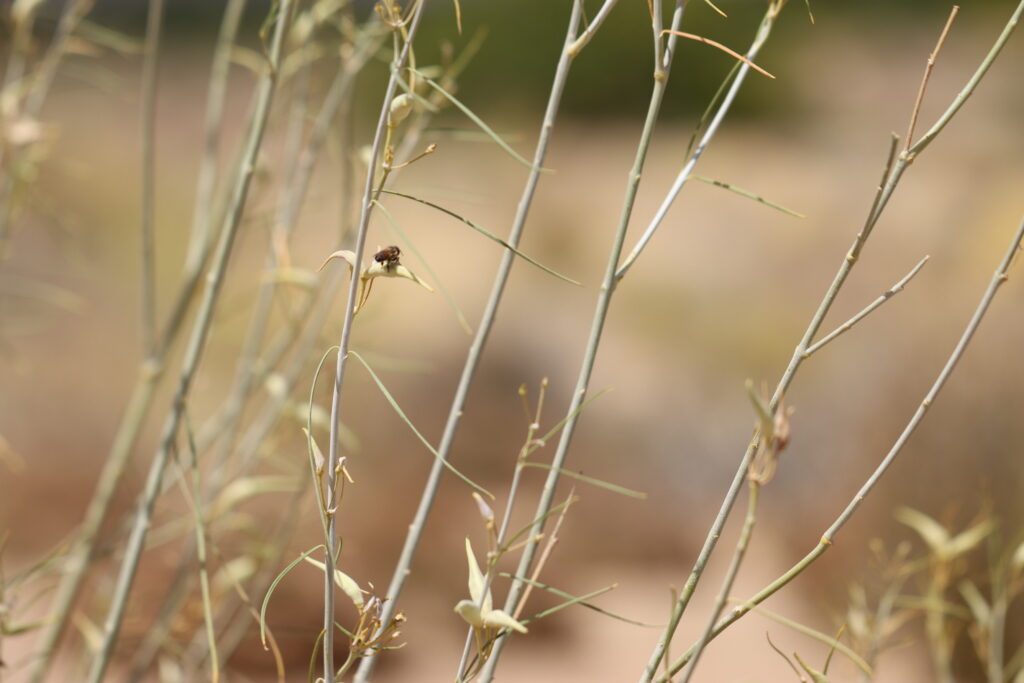
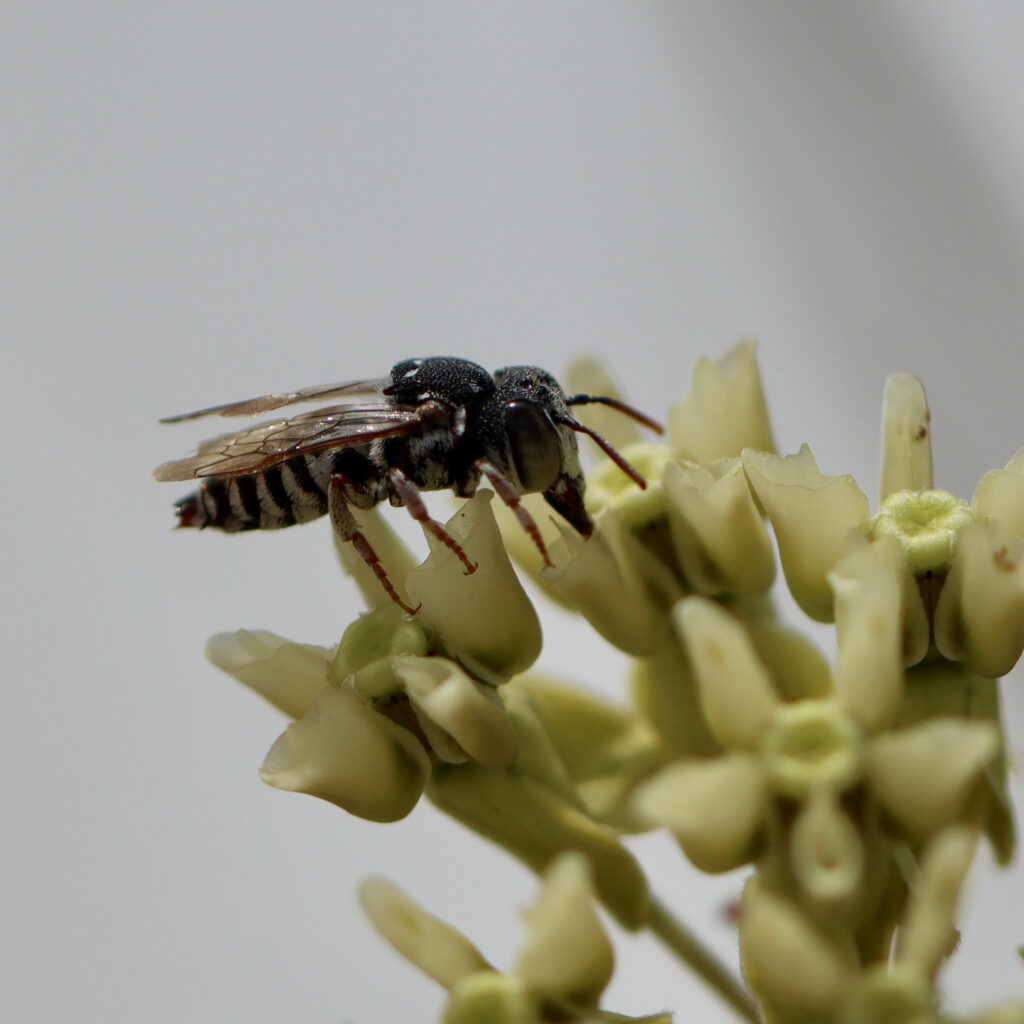
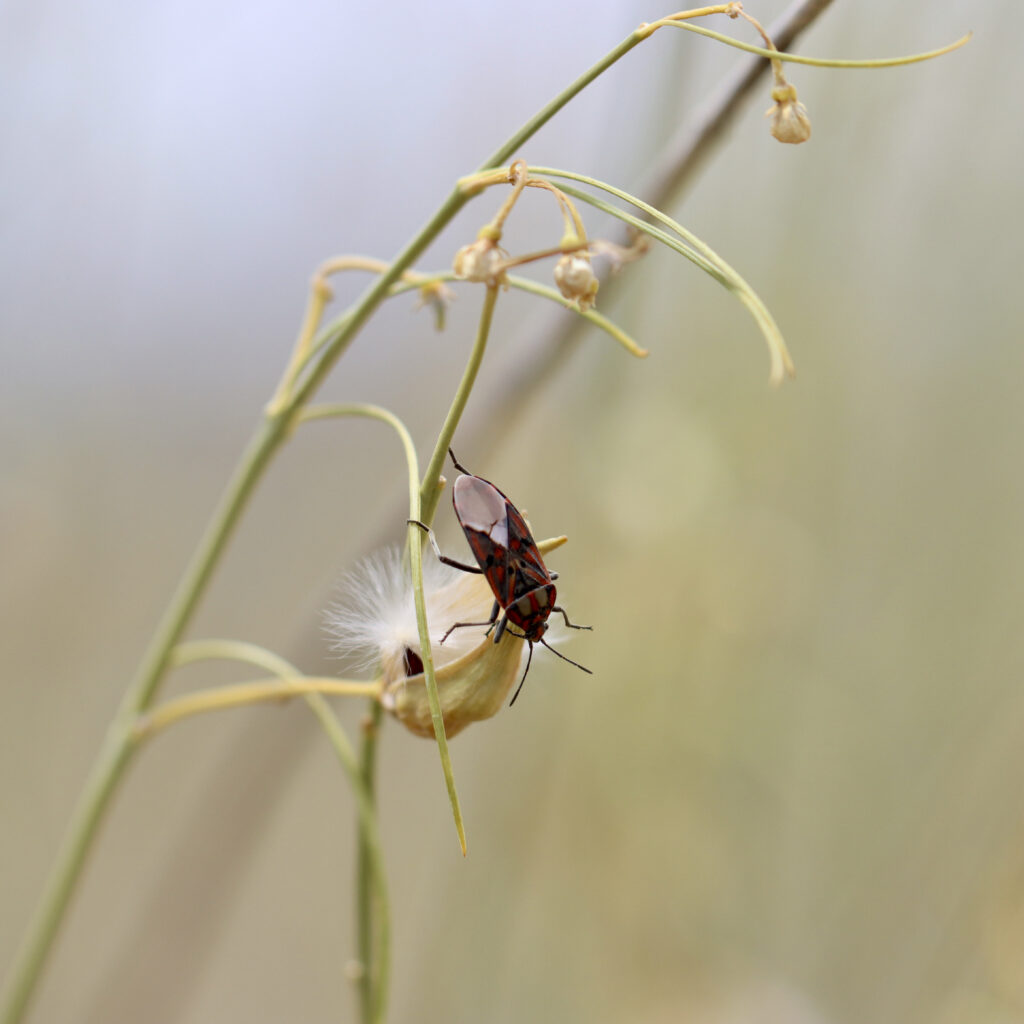
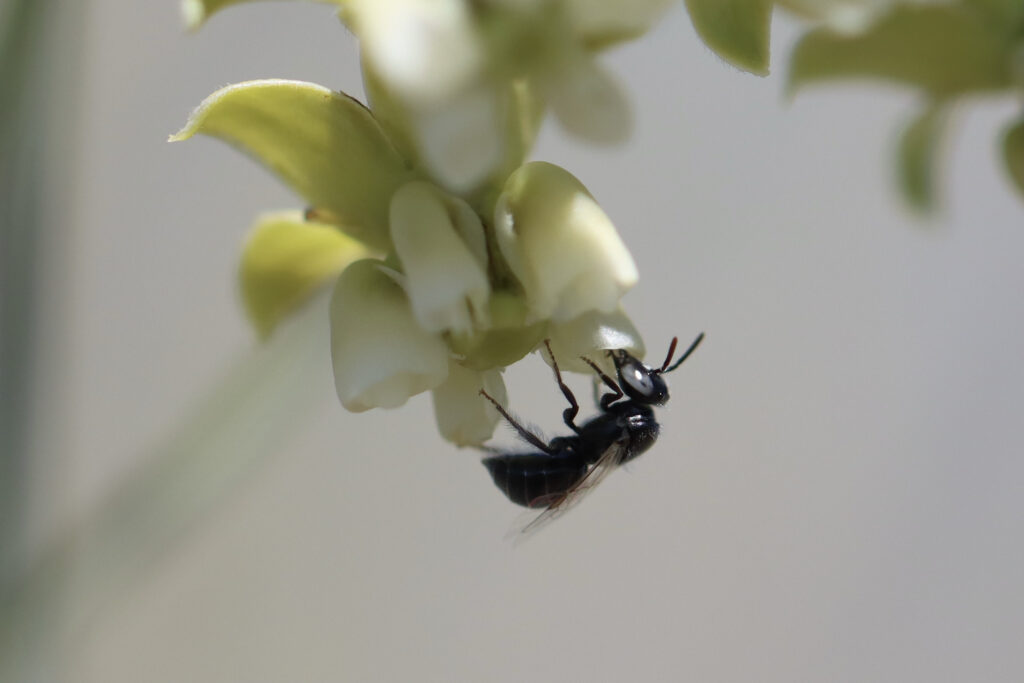
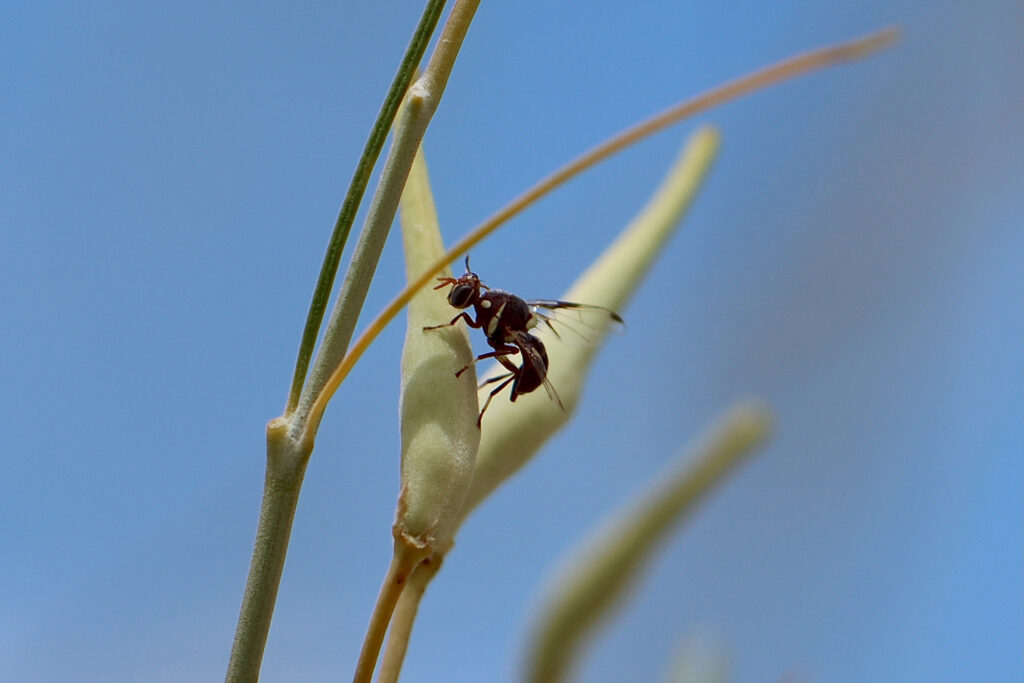
When its seed pods are punctured, lammerlat immediately exudes a resin to seal the pod and protect the seeds within. The puncture is usually a sign that eggs have been laid by the tephritid fly. Seed pods were collected and examined. The larvae pupate in the pod after completing feeding. At Wolwekraal Nature Reserve (113ha) on the outskirts of Prince Albert are several populations of lammerlat where honeybees were immediately observed on the lammerlat collecting resin, but there were also milkweed bugs Spilostethos, muscid flies, and allodapine bees at various locations on the plant. The allodapines collected mostly nectar from the flowers together with a male Coelioxys kleptoparasite bee.

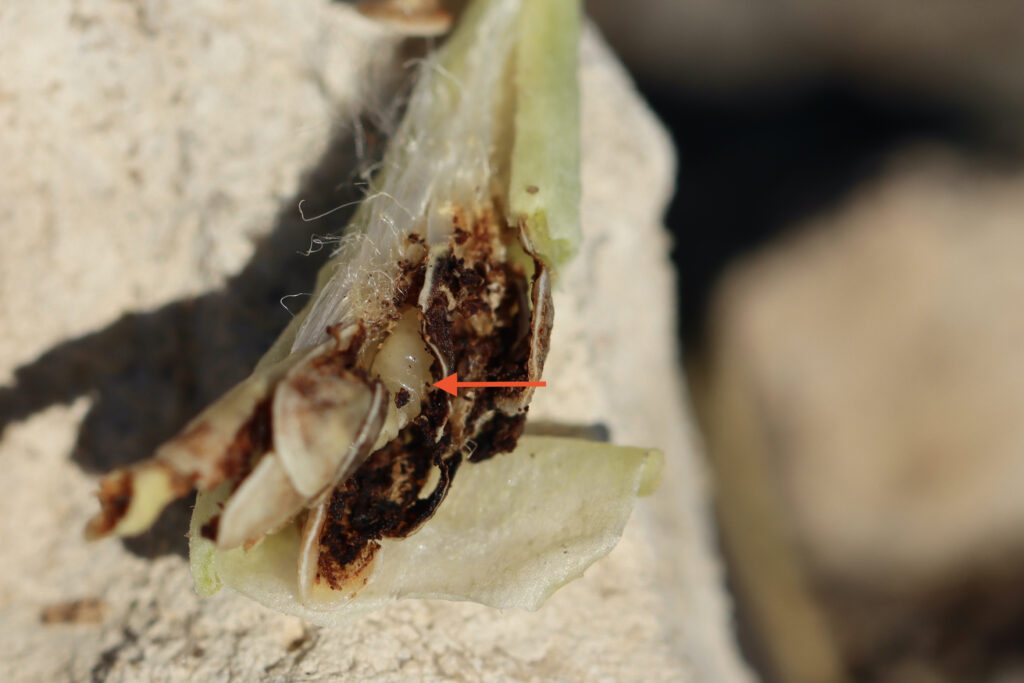
Then a fly which initially looked very wasp-like was spotted on the seed pods. Sue Milton-Dean who offers guided walks on a trail through the nature reserve had studied tephritid flies in Pteronia seeds. One of the conclusions of this study was that flowering and number of seeds containing tephritid fly embryos, were positively correlated with annual rainfall. Sue had a keen eye for these flies. This tephritid fly which was later identified as most probably Dacus bistrigulatus, was laying an egg into the seed pods. We collected a number of seed pods with visible resin and later dissected them under a microscope. Inside each seed pod a larva was found which Sue recognised as a tephritid larva. In seed pods where all of the seeds had been eaten, the biggest mature larvae were found prior to pupation. 

A tephritid fly laying an egg into the seed pod.
Tephritid fly larva consumes the seeds as it develops.
The fly larva consumes the seeds as it develops.

Role of resins in honeybee nest construction

The bees collecting the exudate possibly originated from the two wild honeybee nests located in aardvark burrows on the reserve. At these nests honeybees were seen preparing the surface of the burrow for the application of propolis, enabling the colony to either increase the number and/or length of combs, thereby expanding the size of the colony. Once the surface had been cleaned by worker bees, resins were brought in by the resin-collecting foragers to be used as a sealant. Many of the resins used within a honeybee nest are the main components in propolis. These resins often have beeswax added to it to be more pliable, but can also consist of pure plant exudates in outer structures where it adheres tightly to the substrate, even if the substrate is partly loose.

A honeybee collecting lammerlat resins.
The resins of Vachellia karroo being collected by a resin-collecting honeybee.

Once the propolis is adhered to the substrate, comb building begins and the colony is able to expand to the outer edges of the adhered propolis. Elsewhere in the nest architecture, propolis may incorporate sand grains or plant material to strengthen it. Its thickness depends on where the propolis is being applied and its purpose. Resins play an important and essential role in honeybee nests, far beyond being a sealant. Being defensive chemical exudates of plants, propolis has many anti-bacterial and anti-fungal properties and is aromatic and health-giving with its essential oils. Lammerlat resin as propolis with its cardiac-glycosidic properties could perhaps be beneficial for honeybees in ways that are not yet known, possibly also as a defence mechanism against predators of honeybees, or ants, wax moth larvae and the like. An interesting aspect to consider would be whether the use of propolis for human consumption containing lammerlat resins could be toxic if taken in high doses.

Ecosystem dynamics of Lammerlat

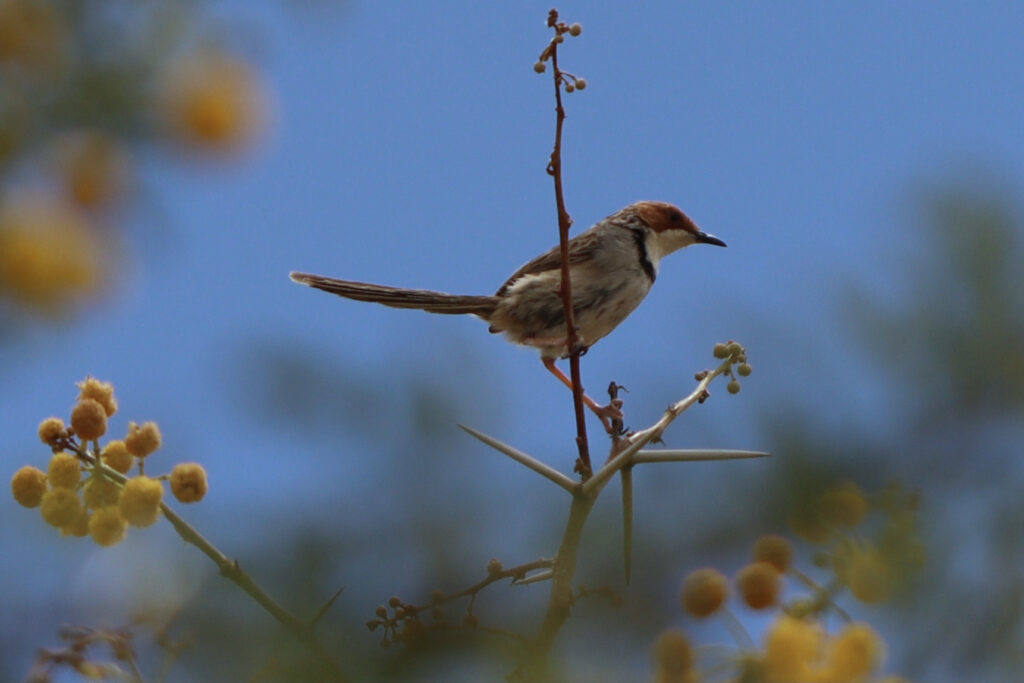
Recently on one of Sue’s nature walks at Wolwekraal, both Rufous-eared warblers and the Karoo eremomelas were seen eating tephritid larvae on the lammerlat. It has also been found that the larvae of these flies are themselves parasitised by a small wasp. The ecological cycle around this arid shrubland species is both complex and remarkable.

A Rufous-eared warbler ((Malcorus pectoralis) photographed here on a Vachellia karroo tree.

SELECTED REFERENCES:

  1. Bruyns, P.V. (2002). The Stapeliads of Southern Africa and Madagascar Volume 1 pg 57.Umdaus Press, 329 pgs
  2. Ellis J.D. Jr and Hepburn, H.R. (2003). A note on mapping propolis deposits in Cape honeybee (Apis mellifera capensis) colonies. African Entomology 11(1): 122-124.
  3. Ghisalberti, E.L. (1979) Propolis: A review. Bee World 60(2):59-84.
  4. Iannuzzi, J. (1983). Propolis: The most mysterious hive element. American Bee Journal 123(8): 573-575.
  5. Iannuzzi, J. (1983). Propolis: The most mysterious hive element Part II – Conclusion. American Bee Journal 123(9): 631-633.
  6. Milton, S.J. (1995), Effects of rain, sheep and tephritid flies on seed production of two arid Karoo shrubs in South Africa, Journal of Applied Ecology 32, 137-144.
  7. Tribe G.D., Tautz J, Sternberg K and Cullinan, J. (2017). Firewalls in bee nests – survival value of propolis walls of wild Cape honeybee (Apis mellifera capensis). Sci. Nat. 104:29. DOI 10.1007/s00114-017-1449-5
  8. Whiteman, N. (2023), Most Delicious Poison, Little, Brown Spark.